The choice of the appropriate raw leather is one of the most critical choices of every business that uses leather. Whether it is footwear, bags, furniture, or automotive upholstery, the quality of raw leather will directly influence the production efficiency, the product durability, control the cost, and the brand image, and you need a good raw leather buyer’s guide to make an appropriate decision.
Incompatible raw leather choices may lead to excessive wastage, ineffective productivity, customer lawsuits, and loss of finances in the long run.
Most businesses fail since they make purchases based on prices or incomplete checks on the raw leather. When delivered without following a systematic process, buyers are likely to end up with hides that are not well preserved, those with significant defects, or those that cannot be used in their final products. This raw leather buyer’s guide is aimed at removing that danger.
In this raw leather buyer’s guide, the manufacturers, importers, and brands will be taught how to inspect raw leather, how to check raw leather by using a convenient checklist, and how to find raw leather suppliers. In conclusion, you will be in a good position to purchase raw leather to make, and have confidence and consistency in your manufacturing.
Understanding Raw Leather for Business Buyers
What Is Raw Leather and How It’s Used in Manufacturing
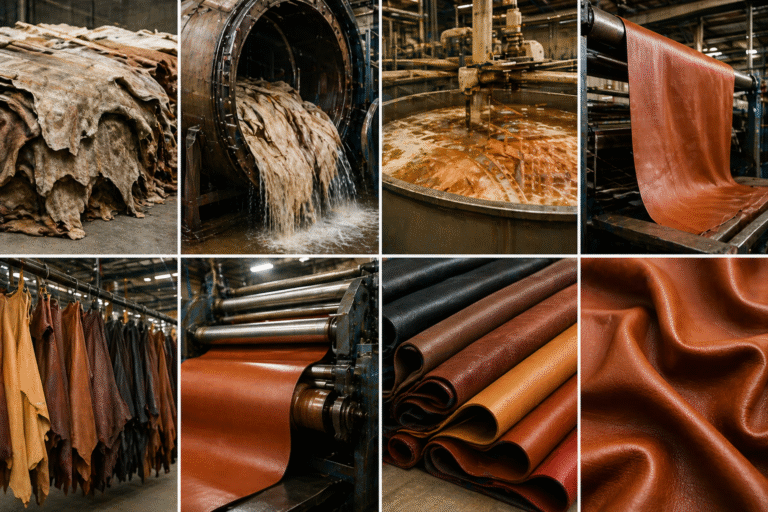
Raw leather involves skins or hides of animals that have not been completely tanned and finished. To preserve these hides, they tend to go through the process of salting, drying, or chilling to avoid the process of decay prior to processing. In the manufacturing process of wet blue, crust, and finished leather, raw leather is used.
To business purchasers, raw leather is an opportunity and a threat. Raw leather of good quality can give more control over tanning of the leather, finishing, and ultimate performance. Poor quality raw leather, on the other hand, restricts the processing features and results in minimal defects during processing.
Raw Leather vs Finished Leather for Business Applications
According to the raw leather buyer’s guide, raw leather is more flexible than finished leather. Finished leather is already processed, and it does not allow much customization and correction. Raw leather, on the other hand, gives manufacturers the option of manipulating tanning techniques, density, pliability, and finishing depending on the needs of the product.
In terms of cost and control, most companies would prefer to purchase raw leather to produce goods due to the fact that it offers them better control over yield and differentiation of products.
Why Raw Leather Quality Impacts Cost, Yield, and Performance
The quality of the raw leather defines the extent of useful area that can be gotten out of each hide. Good quality will mean increased yield, reduced defects, and reduced rejection.
Raw leather of low quality makes loss in trimming, processing waste, and labor expenses are high. That is why a raw leather buyer’s guide with structured raw leather is a necessary tool to make profits over the long run.
How to Choose Raw Leather for Your Business
Matching Raw Leather Type to End Use (Footwear, Bags, Furniture)
Raw leather properties are required in different products. As mentioned in the Raw leather buyer’s guide, footwear needs to be flexible and breathable, bags should be strong and well-built, whereas furniture needs to be thick and tear-resistant.
Knowledge on selection of raw leather according to end use helps in eliminating performance problems in the latter stages of the manufacturing process.
Purchasing raw leather to be produced without matching it to the needs of a product will usually lead to cracking, stretching, or untimely wear.
Choosing the Right Animal Hide (Cow, Buffalo, Goat, Sheep)
Thickness and fiber strength make cow and buffalo hides to be used in heavy-duty products. Goat and sheep hides are softer and have a finer grain and would be applicable in the light product category.
One of the fundamental steps in the process of selecting the raw leather is the selection of the animal hide.
Thickness, Size, and Cutability Considerations
Consistency in the thickness and size of the hide has an impact on the cutting efficiency. The bigger and evenly thick hides have superior cutting designs and reduce wastage. Shoppers should consider the thickness change when purchasing raw leather to be produced in bulk.
Raw Leather Quality Factors Buyers Must Understand
Fiber Structure, Grain Quality, and Strength
Durability is guaranteed by good fiber structure. Close fibers are a sign of good quality of raw leather, whereas free fibers produce weak finished leathers. The aptness of grains influences the visual appeal and the performance, as mentioned in the raw leather buyer’s guide.
Natural vs Excessive Defects in Raw Leather
Natural defects cannot be avoided, but heavy defects diminish the area of use. Customers should be able to differentiate between preferred natural scars and processing or manipulation injuries. This is a vital difference in a raw leather buyer’s guide.
Moisture Content, Preservation, and Freshness
Raw leather that is kept in the right condition is not supposed to be wet or too dry. Moisture levels that do not match indicate that it is not being preserved well, and this might lead to bacterial damage and weakening fibers prior to the tanning process, as told in the raw leather buyer’s guide.
Raw Leather Inspection Checklist for Buyers
Visual Inspection: Grain, Color, Scars, and Damage
A checklist on proper inspection of raw leather begins with visual inspection. Customers need to study the uniformity of grains, discoloration, scars, holes, and cuts. The healthy color may be disproportionate or dark spots that can be evidence of decay.
Physical Checks: Thickness, Flexibility, Smell, and Texture
It is also important to know the physical way to check the raw leather. Consistency of check thickness, flexibility – not cracking, and smell. Bacterial damage is often caused by a strong odor of ammonia or sourness.
Common Red Flags Buyers Should Never Ignore
Big warning signs are sticky floors, scalp hair, mold, excessive dryness, or bad smell. These problems tend to increase in the processing, and they should automatically disqualify the hide.
Understanding Raw Leather Defects and Grading
Common Raw Leather Defects and Their Impact on Usability
Flay cuts, branding marks, tick bites, and wrinkles are defects that lower cutting efficiency. Such high defects reduce production and raise the cost of the usable square foot.
Leather Grades Explained (A, B, C, Select)
Select and Grade A Hides contain fewer defects and can be used more. B and C-grade hides have additional defects and are utilized for low-value purposes. Grading aids buyers in the correct pricing of raw leather, as discussed in the raw leather buyer’s guide.
How Defects Affect Yield, Pricing, and Final Product Quality
A greater number of defects implies wastage, increased labor expenses, and irregular quality of the products. This relationship is also critical in purchasing raw leather as a profitable buyer; it can be better with the help of a good raw leather buyer’s guide.
Raw Leather Sourcing Guide for Businesses
Local vs International Raw Leather Sourcing
Local sourcing will offer faster delivery and convenience in communication, whereas international sourcing will present price and volume benefits. A good sourcing raw leather buyer’s guide considers both alternatives.
Key Raw Leather Exporting Countries
Some of the key major raw leather exporters include Brazil, Pakistan, India, and some African regions. There are various strengths of each origin in terms of the type of hides, quality, and prices.
Advantages and Risks of Global Sourcing
Global sourcing is cheaper, though it brings about risks like logistics delays, quality differences, and regulatory compliance. These risks are minimized by proper planning.
How to Evaluate Raw Leather Suppliers
Supplier Experience, Capacity, and Consistency
Strong suppliers have a constant quality in batches. The main sign of the supplier’s reliability is the experience in the sphere of work and preservation.
Importance of Sample Approval and Trial Orders
Sample approval is critical. The buyers are never to make bulk orders without trying samples. The consistency and decreased sourcing risk are confirmed by trial orders.
Certifications, Compliance, and Traceability
The systems and certifications indicate professional operations. They assist purchasers with the compliance and sustainability demands.
Pricing, Yield, and Cost Considerations in Raw Leather Buying
Understanding Price vs Quality Trade-Offs
Raw leather of the cheapest type may seem good in the sourcing process, and it is often the source of increased total costs in processing.
Hides of poor quality tend to have more defects, uneven thickness, and poor fiber structure that enhance trimming wastes and rejection. Price-oriented buyers usually incur more losses in tanning, poor finishing, and high labour expenses.
The smart raw leather buyer’s guide focuses on value instead of price because it takes into account the area of use, performance during the process, and the lifespan of the final product. Spending a little more on higher -quality raw leather may mean a reduction in the unit cost and long-run profitability.
Yield Percentage and Cutting Efficiency
Per cent yield is the ratio of usable leather that can be made out of a raw hide after cutting away the defects and irregularities. Increased yield not only increases cutting efficiency but also reduces waste. The material cost per product is also low, as mentioned in our raw leather buyer’s guide.
Hides with a low yield will demand more hides in order to yield the same production, and will make purchases and processing more expensive. You can get all of this information and more with the help of a good raw leather buyer’s guide.
Customers will need to consider how yields change between batches when purchasing raw leather to make products because a minor change in yield can have a big effect on production profitability at large volumes.
Hidden Costs Buyers Often Overlook
Most buyers do not appreciate the indirect costs involved in the sourcing of raw leathers. Mold or drying storage losses, transport damage, insurance payments, delays in customs, reprocessing costs, and rejected lots are all real costs. Which is why a good raw leather buyer’s guide is important.
Raw leather of poor quality can also add to the energy, chemical, and labor consumption in processing. A good raw leather buyer’s guide takes into consideration these non- visible expenses, and it assesses the total landed cost and not the purchase price.
Storage, Handling, and Logistics for Raw Leather Buyers
Storage Requirements Before Processing
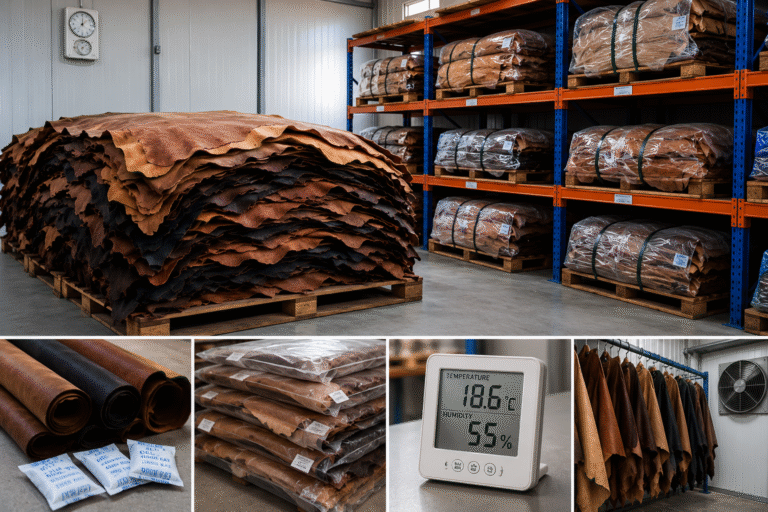
The raw leather should be kept in a controlled temperature and humidity environment to avoid bacterial growth, moulding, and damage to the fibers. Too much heat may bring about accelerated decay, and too much dryness may lead to cracking and stiffness.
Ventilation and hygiene are of importance. Unless buyers properly consider the storage needs, they may not use what they can before the processing even starts, no matter how well the raw leather was when it was bought.
Transport Risks and Preservation During Shipping
The transportation of raw leather radically damages it by exposing it to changes in temperature, moisture, and handling stress.
Appropriate packaging and airflow should be accompanied by appropriate preservation techniques, including salting or controlled chilling. Poor packing, transit, or container conditions may lead to spoilage and odor problems.
Time of transportation, preservation process, and reliability of goods logistics should always be evaluated by the buyers sourcing abroad as a part of the raw leather buyer’s guide.
How Poor Handling Affects Leather Quality
They may get torn, folded, compression-marked, and contaminated during rough handling during loading, unloading, or storage. Lying on surfaces that are dirty brings about bacteria and stains.
Even high-quality raw leather may go to waste when it is mishandled. It is necessary to use well-established handling procedures and professional logistics collaborators to preserve the quality of raw leather between the suppliers and the factory floor. You can avoid these mistakes by having a good raw leather buyer’s guide.
Common Mistakes Buyers Make When Buying Raw Leather
Choosing Based on Price Alone
Price-only decisions do not focus on yield, defect level, and processing performance. Poor quality raw leather can result in increased wastage, poor production, and customer complaints. In the long run, this will destroy margins and the brand name.
The knowledgeable buyers apply a raw leather buyer’s guide, which is designed to assess the total value rather than the initial cost.
Skipping Inspection and Testing
By not doing an inspection, the buyer is deprived of the right to check the preservation problems, defects that are hidden, and inconsistencies at an early stage. Problems are only detected during processing when it is too late, or it is too costly or impossible to fix them. The ability to check raw leather correctly is an inadmissible action in professional sourcing.
Weak Supplier Communication and Documentation
Poor communication, lack of documentation, and specifications lead to confusion regarding grades, preservation techniques, and tolerances.
This tends to create controversies, time wastage, and unreliability in supply. The sourcing of reliable raw leathers that are reliable is pegged on well-written agreements and documentation, which can be studied well with a good raw leather buyer’s guide.
Best Practices for Buying Raw Leather for Manufacturing
Creating a Standard Raw Leather Buying Checklist
A checklist that is standardized is used to assess all purchases with regard to the same parameters, such as inspection points, grading standards, moisture levels, and documentation.
This system ensures less human error, better supplier responsibility, and greater internal control of quality when purchasing raw leather to produce, with the help of the raw leather buyer’s guide.
Building Long-Term Supplier Relationships
The benefits of long-term relationships with the suppliers are that it motivates them to focus on the quality, consistency, and delivery in a timely manner. Good relationships enhance communication, stabilize the price, and enable greater planning.
A collaborative relationship among suppliers also means that they are more likely to change specifications and collaborate to solve problems compared to those that are transactional.
Reducing Risk Through Consistent Quality Control
Standard quality checks throughout the shipments cushion the businesses against sudden fluctuation. Periodic checks, performance appraisals, and feedback mechanisms are used to detect problems early. Quality control is a process that is not single but has an ongoing system to assist with sourcing raw leathers effectively.
Final Takeaway: A Smart Raw Leather Buyer’s Guide for Business Success
An effective raw leather buyer’s guide is not just about picking hides, but about establishing a hierarchical way of assessment, sourcing, management, and control of suppliers.
By emphasizing quality, yield, discipline of inspection, control of logistics, and relationship with suppliers, business firms will be able to minimize risk, manage costs, and obtain stable production outcomes.
Smart raw leather purchasing can never be reduced to the lowest cost; it is a matter of making knowledgeable purchasing choices that can be used to enhance sustainable development with the raw leather buyer’s guide.
FAQs
- What are the 4 types of leather?
There are four broad categories of leather, which include full-grain leather, top-grain leather, corrected-grain leather, and split leather. All types vary in surface treatment, durability, appearance, and application in certain areas like footwear, bags, furniture, and upholstery.
- What are the raw materials for the leather industry?
Animal hides and skins of cattle, buffalo, sheep, goats, and camels are mainly utilized in the leather industry. Other raw materials comprise the water, tanning agents, chemicals, and finishing materials, which are required in the transformation of raw hides into the final products of leather, such as usable, strong leather.
- How to choose a good leather?
Good leather ought to contain a good fiber structure, even grain pattern, limited defects, appropriate thickness, and no strong and foul odor. To maintain quality and performance, buyers are expected to perform visual inspection, physical test, and sample approvals. You can get an idea by having a good raw leather buyer’s guide.
- What is the leather selection process?
The process of leather selection entails setting the end-use requirements, selecting the correct type of hide, grading, inspection, sample approval, and consistency assessment of the supplier. It is an organized method that reduces the risk involved and guarantees that production will be predictable.
- What is category 10 leather?
The use of category 10 leather tends to be an internal or regional type of grading and not universal. Depending on the supplier or market, it has different meanings, and thus buyers should demand the documentation and definition of meaning in order to avoid misunderstandings in quality or make wrong buying decisions.