It is important to know how to store raw leather in the right way since raw hides are very sensitive. They may get molded, dry, rot or grow up bacteria, when kept improperly- problems that cannot be reversed once they occur.
The correct raw leather storage conditions ensure that the hide survival is preserved in terms of strength, grain texture and durability so that it tans properly in the future.
Raw hides do not react the same way as finished leather; hence, it is important to learn how to store raw leather to avoid wasting it and destroying value.
This guide is about the dangers, the proper environment, and all methods employed by the tanneries to preserve the quality of leather.
How to Store Raw Leather Correctly: A Simple Beginner’s Guide
Ideal Temperature and Humidity Levels for Storage
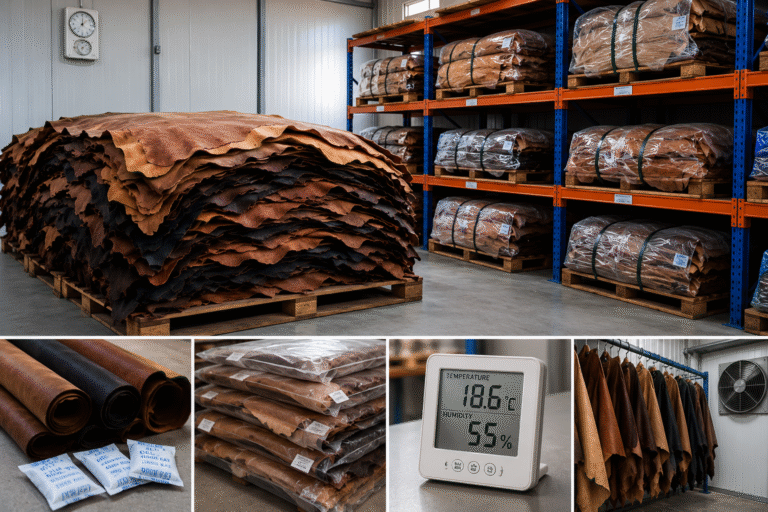
The initial move in knowing how to store raw leather is regulating the temperature and humidity. Raw hides must remain cool (preferably between 4 °C and 10 °C) and kept dry.
Raw leather should not be stored in the damp condition, this is achieved by maintaining stable raw leather storage conditions that ensure there is no accumulation of moisture promoting rot or mold. Regular temperature helps to keep away growth of bacteria and also drying.
These are the facts that should be known to avoid the damage of raw leather.
Proper Ventilation to Prevent Moisture and Odors
The other important section in the way of storing raw leather is ventilation. The absence of air causes moisture to stagnate and form offensive smells and spots of molds. Ventilation is enhanced by use of racks, open shelves or mesh containers.
The proper airflow also helps in good storage of raw leathers contributing to the life of storage. This is among the easiest ways of inhibiting the destruction of raw leathers in both short and long term storage.
Understanding Raw Leather Storage Conditions
Why Stable Temperature Prevents Raw Leather Damage
Changes of temperature lead to contraction, cracking and microorganism activity of the fibers. The storage of the hide in stable raw leather conditions allows the hide to avoid sudden dryness or quick growth of microbes.
The ability to store raw leather implies having hides in a setting that remains the same at all times during the day.
The Importance of Clean and Dry Storage Spaces
Lots of clean areas minimize pollution. Hides are damaged by numerous issues that are brought about by dirt, insects and moisture.
Arid, dry conditions provide unvarying age-related conditions and conservation. That is why learning how to preserve raw leather involves keeping places of storage, not only the hides.
Raw Hide Storage Methods Used in Tanneries
The tanneries adopt special storage of raw hides to promote quality. These methods prolong storing life before the initiation of tanning.
Salting Method: When and Why It’s Used
One of the oldest and most effective is the salting as one of the raw hide storage methods. Salt is a drying agent and it inhibits bacteria.
Salting is necessary to understand how to preserve raw leather over a longer period. It comes in particularly handy when tanning does not occur instantly.
Chilling and Freezing Methods for Short-Term Storage
Modern raw hide storage techniques include refrigeration and freezing, which are used to slow down the process of decomposition. Chilling conserves the hide in a few days time whereas freezing is more long lasting.
These are effective storage methods of raw leather when there is a shortage of time to process the raw leather.
Drying and Air-Curing Techniques for Long-Term Storage
Raw hides are air dried into stable material that can be stored over a long period of time. As these raw hide storage processes demand controlled environments, cracking can be prevented.
They are important on the way of saving raw hides when there is a necessity to store them long.
How to Preserve Raw Hides Before Tanning
Cleaning and Preparing the Hide Immediately After Removal
Preparation The storage of raw leather is important to ensure that one understands how to store raw leather. Raw hides should be washed to get rid of the blood, dirt as well as the flesh. All this is a breeding ground of bacteria and insects.
Clean hides are more applicable in long-term raw leather storage conditions and they are easier to preserve.
How to Handle, Fold, and Transport Raw Leather Safely
It is important that proper handling be done in the preserving of the hides (raw hides).
It is important not to drag the hides or to bend them up too tight causing creases or even cracks. The right way of transportation minimizes heat and humidity.
Each detail counts when it comes to learning how to store raw leather and how to avoid damage to raw leather.
Preventing Raw Leather Damage During Storage
Protecting Raw Leather from Insects and Bacteria
The greatest threat to raw hides is insects and bacteria. Insect-proof areas, closed containers, and correct cleaning are some of the best storage conditions of raw leather.
This goes a long way in preventing the damage of raw leather and maintaining integrity of fibers.
Avoiding Common Mistakes That Cause Rot, Cracks, or Odor
The most prevalent errors are keeping hides moist, piling them up tightly or keeping them in high temperatures. It is possible to avoid such problems only after realizing how to store raw leather.
One of the most common mistakes is caused by inappropriate storage methods of raw hides, although these are easy to resolve by making some changes.
Tools and Supplies Needed to Store Raw Leather Properly
Best Containers, Racks, and Packaging Materials
Raw leather is stored in the form of wire racks, breathable containers, and plastic-lined bins, which ensure good conditions. These devices enhance the airflow, they eliminate contamination and they provide space where the hides can lie flat.
Any individual who is taught how to store raw leather must invest in robust storage apparatus.
Monitoring Tools: Thermometers, Moisture Meters & Airflow Setups
During the storage of raw leather, thermometers and moisture meters are used in order to ensure proper conditions. The correct standards on how to preserve raw leather will be maintained by proper monitoring.
Fans and other vents used in the air circulation also contribute to the elimination of the damage of raw leather.
How to Tell If Raw Leather Has Been Stored Correctly
Visual Signs of Healthy vs Damaged Raw Leather
Raw leather is healthy, the natural leather is of a light color, slightly odorous and hard to touch. Hides with dents are molded, blackened, smelly or too dry. These signs are a part of knowing how to store raw leather properly and the assessment of the raw hide storage.
When to Reject, Re-treat, or Re-preserve Raw Hides
In case of defects, hides might require re-salting, cleaning or drying. In extreme situations, they have to be disposed of. Such decisions assist the businesses in maintaining quality and observe appropriate how to preserve raw hides practice.
To know how to store raw leather is to know when it is too late.
Final Takeaway: Storing Raw Leather the Right Way
This is because learning how to store raw leather would result in higher-quality tanning results, less defects, and greater durability in the long-run.
Under these conditions of stable storage of raw leather, correct storage of raw hide procedures, and suitable methods of how to preserve raw hides, any one can preserve the quality of hides. The knowledge of these steps is the key to avoiding damage of the raw leather at all the stages.
FAQS
- How to protect raw leather?
Store Your Beautiful Lather Not in Direct Sun or Causes of Heat. Among the most essential things that you can do to avoid fading of your leather furniture is ensuring that it is not exposed to direct sunlight or heat sources. Leather is a natural product, and it will deteriorate with time when coming into contact with the sun.
- How long can leather be stored?
The leather can be stored without any harm for up to one and two years. We suggest that you should not keep it in covered plastic containers because leather requires air and the plastic will not allow this. It is also necessary to avoid keeping leather in the open sunlight.
- How to condition unsealed leather?
All types of leather can be conditioned using a number of products like:
Leather creams – offer the most minimal color variation and are excellent on aniline leathers.
Leather oils- The oils of the natural varieties such as Lanolin and neatsfoot can soften leather.
- Should leather be hung or folded?
Leather must have the capacity to breathe and the plastic containers block air and suffocate the breathing space of the leather. You might even feel like hanging your jacket in case you cannot fold it allowing it to move freely.
- How to store leather so it doesn’t go mouldy?
keep leather objects dry, keep in well-ventilated spaces that have sufficient airflow. It is not advisable to leave leather materials in wet places or be in direct contact with wet walls and floors. Use breathable covers or dust bags in order to protect the items and keep the air flowing.