The most important decision in the manufacture of bags and small leather goods (SLGs) is the selection of suitable raw leather types for bags. Bags have to strike a balance between structure, aesthetic, durability, and the brand perception simultaneously, unlike footwear or furniture.
Making a bad selection of the raw leather might result in not keeping the shape, early wear and tear, dissatisfaction among the customers, and brand damage in the long run.
Manufacturers of bags also have various problems compared to footwear manufacturers: bags have to carry some weight, retain their shape, and look appealing as they wear, and at the same time feel luxurious.
This is the reason why it is important to know the raw leather types for bags, their performance features, and the criteria of choice.
This booklet describes the ideal raw leather to use for bags, the role of quality of raw leather on handbags and SLGs, and how customers can be sure to find, test, and purchase raw leather to produce the same high-quality bag every time.
Understanding Raw Leather Requirements for Bags and SLGs
Why Bags and SLGs Need Different Raw Leather Than Footwear
The stress patterns of bags and SLGs are not the same as those of shoes. Footwear leather stretches and stretches, whereas bag leather has to endure not being stretched, not drooping, and not being deformed when it is loaded.
Raw leather types for bags should have better structural stability, controlled stretch, and edge performance compared to most footwear leathers. The tendency of using footwear grade leather in bags causes poor shaping and poor handles.
Raw Leather vs Finished Leather in Bag Manufacturing
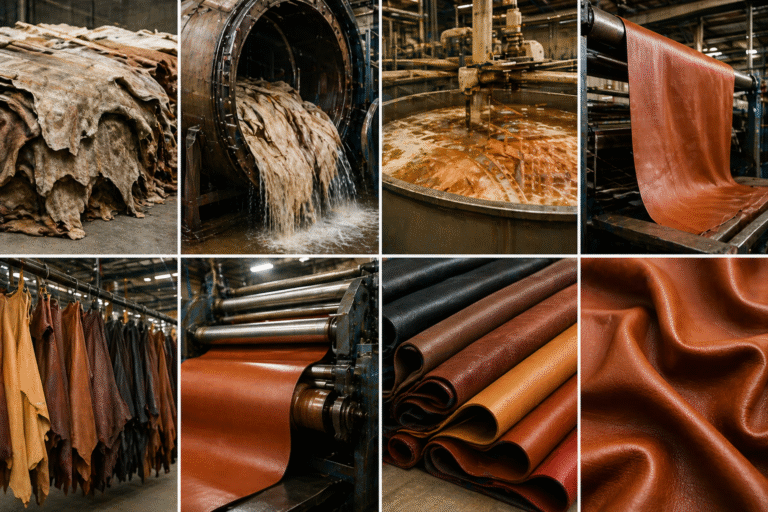
The majority of bag manufacturers (premium ones) use raw leather instead of finished leather because raw leather is easier to control during the tanning and finishing processes.
Off-the-shelf types of leather can be used to create bags; this gives manufacturers the chance to set the firmness, color depth, surface finish, and consistency of the bags, which is essential to brand identity and uniform bag appearance.
How Raw Leather Quality Impacts Bag Structure and Longevity
Raw leather types for bags, which are of high quality, guarantee a high fiber bonding, uniform thickness, and even grain. All these directly influence the level of performance of a bag in terms of holding its shape, hardware support, and age. Low quality of raw leather leads to stretching of panels, broken edges, and wear.
Best Raw Leather Types for Bags and Handbags
Cow Raw Leather for Bags: Strength and Versatility
One of the most popular raw leather types for bags is cow raw leather. It has a great combination of strength, thickness, and workability. Cow raw leather is great when it comes to totes, handbags, and other curved designs; therefore, it is a common product used in the production of mid-range and high-quality bags.
Buffalo Raw Leather for Heavy-Duty Bags and Backpacks
Buffalo raw leather is also heavier and firmer than cow leather and hence can be used in heavy-duty bags, backpacks, and travel equipment.
Although it is not as polished in grain, it is competent in load-bearing uses where toughness is more important than tenderness. The utility and outdoor brands make use of these raw leather types for bags.
Goat Raw Leather for Premium Handbags and SLGs
The goat’s raw leather is very much regarded in the manufacturing of luxury bags. Its fineness, high tensile strength, and lightness make it one of the best raw leather for bags
Goat leather is particularly known to be used in wallets, small handbags, and priced SLGs that need a sleek look and stability.
Sheep Raw Leather for Soft Bags and Small Accessories
Raw leather for small leather goods and soft and flexible bags is suitable because sheep raw leather is lightweight and soft.
It is, however, less strong against tearing and is not suitable in load bearing bags. These raw leather types for bags are carefully chosen.
Raw Leather Types for Small Leather Goods (SLGs)
Raw Leather for Wallets, Belts, and Card Holders
SLGs demand small leather goods that small leather goods need raw leather to achieve good performance at thin gauges.
Raw leather that is preferred is goat and fine cow, as they retain their strength even after being split thin, such that it is durable and leaves clean edges.
Thickness and Flexibility Requirements for SLGs
SLGs’ raw leather should be thin but strong. Excessively soft leather tires, and excessively hard leather splits along folds. The use of proper raw leather types for bags and SLGs avoids the failure and deformation of edges.
Grain Quality and Edge Performance in Small Goods
The tightness of grains and edges play very important role in SLGs. Small leather goods made with high-quality raw leather give clean, polished edges and can be finished without the fraying of the fibers.
Raw Leather Quality Factors for Bags and Handbags
Fiber Density, Tear Strength, and Shape Retention
Fiber density is critical to the quality of leather to be used in making handbags. Fibers are thick, and they do not stretch or tear; bags preserve their shape. This will be one of the critical considerations in the assessment of raw leather types for bags
Surface Grain, Texture, and Visual Appeal
Bags are visual products. Raw leather with even grain and a natural feel adds to the perception of value. Overly smoothed grain can conceal faults, but it will decrease the durability in the long run.
Natural Defects and Their Impact on Bag Yield
Scars, wrinkles, and insects destroy cutting areas. Learning to determine the impact of natural defects on yield is important when buying raw leather in large quantities to hit bag targets.
How to Choose Raw Leather Based on Bag Type
Raw Leather for Tote Bags and Travel Bags
The thickness of raw leather used in these bags will be needed in bags where the tear resistance is high, and the bag’s stretch is controlled. Raw leather, such as cow and buffalo are usually utilized.
Raw Leather for Luxury Handbags
High-quality raw leather is required in luxury handbags in terms of fine grain, uniform thickness, and high finishing reaction of the handbag. This segment is dominated by the goat and high-grade cow leather.
Raw Leather for Backpacks and Utility Bags
Utility bags are more in favor of durability than softness. Buffalo and strong cow raw leather varieties of the bag do well in this use.
Raw Leather Inspection Checklist for Bag Manufacturers
Visual Inspection: Grain, Scars, and Color Consistency
Check the tightness of the grain, the marks in it, and the uniformity of colors. The raw leather types for bags have uneven grain, which indicates poor structure.
Physical Checks: Thickness, Stretch, and Feel
Stretch tests indicate the stability of fibers. Raw leather must be able to withstand deformation and be flexible.
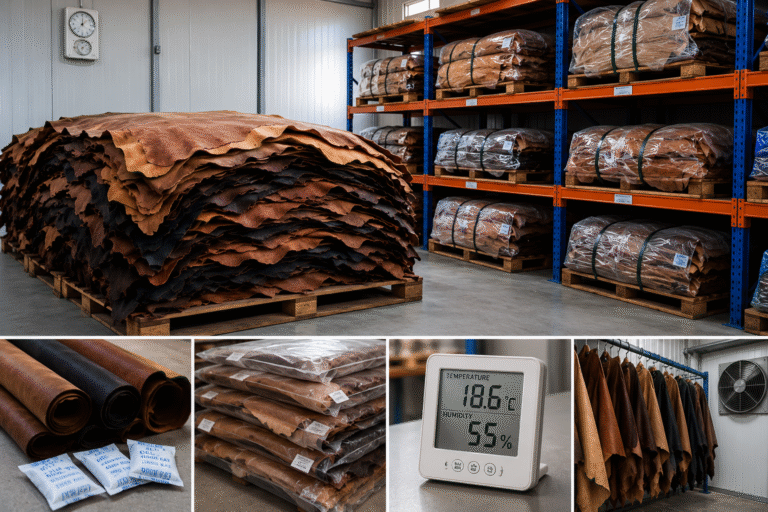
Smell, Moisture, and Preservation Condition
Bad smells that are strong, either chemical or sour, are signs of inadequate preservation. SLG’s leather, when properly preserved, smells clean and natural.
Sourcing Raw Leather for Bags and SLGs
Local vs Imported Raw Leather for Bag Manufacturing
Local sourcing will have a quick and communication benefit, whereas imported raw leather types for bags will offer a better price and volume.
Countries Known for Bag-Grade Raw Leather
Other countries, such as Pakistan, Brazil, and India, are known to produce raw leather quality for handbags to be used in the mass manufacture of bags.
Risks and Benefits of Global Sourcing
Global sourcing saves on cost but poses risks in terms of logistics, compliance, and uniformity. Well-developed inspection systems are required.
Common Mistakes When Choosing Raw Leather for Bags
Choosing Leather Based Only on Softness
Being soft does not mean quality. Too soft types of raw leather used in bags are not always structurally sound.
Ignoring Structural and Load-Bearing Needs
The fact that stress on loads has not been taken into consideration results in stretched handles and deformed panels.
Skipping Sample Testing and Trial Production
The avoidance of trials raises the number of rejected and lost products.
Best Practices for Selecting Raw Leather for Bags and SLGs
Here we will talk about the best raw leather for SLGs as well as bags.
Matching Leather Choice With Brand Positioning
Luxury brands need handbags of the best quality of raw leather, whereas utility brands are concerned with their durability.
Creating a Bag-Specific Leather Checklist
A checklist standardizes the evaluation between batches and suppliers.
Ensuring Consistency Across Production Batches
Consistency means a stable yield of products and a consistent quality of cut products.
Final Takeaway: Choosing the Right Raw Leather Types for Bags
The strategic decision is the leather selection for bags of the raw leather types for bags, and it directly affects the sort of durability, the appearance, and the brand name. The understanding of leather properties, inspection, sourcing risks, and usage requirements can help manufacturers reduce waste, increase yield, and manufacture high-quality bags and SLGs regularly.
The long-term scale benefits of the product and customer trust will be gained when taking time to make the right choice of raw leather.
FAQs
- Which type of leather is best for handbags?
Top-grain and full-grain leather are reportedly the most suitable leathers when making handbags because they are tough, natural in grain, and they mature beautifully. High-end handbags are also made of goat leather as it is light, durable, and does not stretch, and it also provides the handbag with a high-class appearance.
- What is the raw material of leather?
The raw material of leather is the animal hide or animal skin; the most popular ones are cows, buffalo, goats, and sheep. The hides are stored and made tanned to transform them into tight leather, which is strong and flexible to be employed in the manufacturing of various products.
- Which country is famous for leather bags?
Italy is a country with bags of leather bags throughout the globe courtesy of its production, fine material and luxury. France, Spain, and Pakistan are known to be producers of good leather handbags, luxury, and in the mass market.
- How to style a leather bag?
Dressing style has a difference in wearing a leather bag. The formal attires are worn with the structured leather bags, which are worn in a formal style, whereas the soft leather totes are worn in an informal way. Simple outfits can be elevated by using textured or statement leather bags, and neutral-colored bags will be used.
- Do Gen Z use handbags?
Indeed, Gen Z adores the use of handbags, although with emphasis on functionality, sustainability, and personal style. Crossbody bags, mini bags, and sustainably sourced leather in particular are all favored by Gen Z consumers who attach both fashion and utility to them.