Leather manufacturing quality control is the key to regular leather production. The leather factories have quality control systems to ensure that raw hides, processed leather, and finished products comply with specified performance, appearance and safety standards.
The knowledge of the leather manufacturing quality control assists the buyers, manufacturers and auditors to determine reliability, minimize defects and sustain consistency throughout the batches.
It is not only in the final inspection that leather manufacturing quality control is done; it is a long continuing process that goes through intake of raw leather, processing, tanning, finishing, and dispatching.
A well-developed quality control system on leather maintains a good brand reputation, decreases wastage, and ensures that the leather satisfies the demands of the global buyer in the supply chain of leather.
Raw Leather Quality Control at the Factory Level
Inspection of Raw Hides Before Processing
The raw leather quality checking starts as soon as the hides get to the factory. The sizes, thickness, moisture content and preservation of each hide are checked.
To achieve this, teams controlling the leather manufacturing quality control processes will be able to detect unsuitable hides early on before processing to save unwarranted cost and contamination in the later stages.
Identifying Defects in Raw Leather
Scars, holes, flat cuts, tick bites and uneven thickness are some of the defects detected during the quality control of raw leather.
Early detection of these problems assists the factories to plan cutting strategies and minimize wastes. Quality control in leather manufacturing involves the use of trained individuals in the positions of the inspector who knows the degree of the defect and its effect on usability.
Grading and Sorting Based on Quality
Hides are inspected and sorted after grading based on the leather factory quality standards. The grading process also facilitates the processing of hides of similar attributes and this promotes consistency, in addition to assisting in predictability in subsequent stages of inspection in the quality of the leather.
Leather Quality Control Systems Used in Manufacturing
In-Process Quality Control During Leather Processing
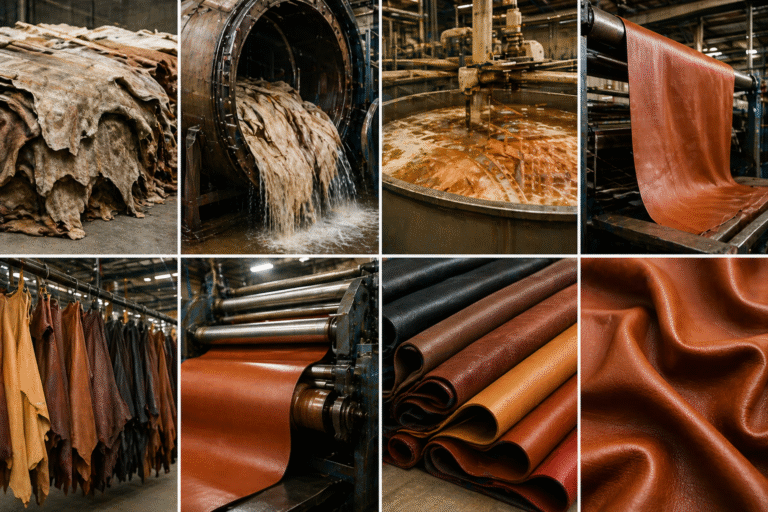
During soaking, liming, fleshing and tanning, quality leather manufacturing quality control remains. On-process inspections are performed to guarantee every step of the processing of the leather is within the set parameters.
This is a planned method of enhancing quality control systems of leather and minimizing batch variation.
Monitoring Thickness, Moisture, and Chemical Parameters
Teams of leather manufacturing quality control are constantly controlling their thickness, moisture content, pH and chemical penetration.
These are measures that are used to keep uniformity and avoid defects that might emerge after tanning or finishing.
Standard Operating Procedures in Leather Factories
The quality standards of leather factories are imposed on the standard operating procedures (SOPs). These processes outline inspection processes, tolerance, corrective measures and records so that there is uniformity among shifts and production batches.
Leather Quality Inspection Methods
Visual Inspection Techniques
Visual evaluation is extremely important in quality inspection of leather. The grain pattern, surface cleanliness, uniformity of color and apparent defects are evaluated by the inspectors with controlled light conditions.
The visual inspection has been an inseparable part of quality control in the leather manufacturing.
Physical Testing for Strength, Flexibility, and Thickness
Tensile strength, tear resistance, elongation and thickness are measured using physical tests. The tests assure that leather fits into the functional requirements and assist with leather manufacturing quality control to be used in performance-critical applications.
Surface, Grain, and Finish Quality Checks
Leather that is finished is subjected to surface and grain tests, in order to test the correct adhesion, smoothness and durability. Such inspections also ensure that the quality control systems in the production of leather have been successful.
Quality Control in Tanning and Wet Blue Production
pH, Shrinkage, and Chemical Penetration Checks
In tanning, the leather manufacturing quality control is on pH balance, temperature of shrinkage, and chemical penetration. These conditions dictate stability and durability of leather.
Wet Blue Leather Quality Standards
Wet blue leather is tested with regard to consistency of thickness, color and fiber structure. Wet blue quality standards should be followed to keep trust in the quality standard of leather factories.
Preventing Defects During Tanning
The defects that include loose grain, uneven colour and chemical damages are very common tanning defects that are prevented with proper process control. Effective rejection control systems in terms of leather quality promote yield.
Quality Control During Finishing and Final Production
Color Consistency and Dye Penetration Checks
The matching of colours is essential in finishing. The leather manufacturing quality control process is to ensure that the dyes are penetrated evenly and to attain approved color standards across the batches.
Finish Adhesion and Surface Durability
Finish adhesion tests are used to test resistance to abrasion, peeling and cracking. The effectiveness of leather manufacturing quality control in final production stages is justified by these tests.
Final Inspection Before Dispatch
Final inspection of the leather quality is done by leather quality inspection teams prior to shipment to ensure that they meet the requirements of the buyer and internal requirements. Such a move protects brand reputation and customer satisfaction.
Leather Factory Quality Standards and Compliance
Internal Quality Standards vs Buyer Requirements
The quality of leather factories are conformed to buyer specifications. The leather manufacturing quality control is an intermediary between internal processes and external requirements and therefore guarantees adherence.
ISO, REACH, and Environmental Compliance
New quality control of leather production also includes ISO systems, REACH chemical compliance, and environment rules. These criteria safeguard the purchasers and manufacturers.
Documentation and Traceability Systems
Tracing throughout the leather supply chain is documented. The successful quality control systems of leather take the results of inspecting and test data and corrective measures to engage audits and buyer inspection.
Role of Technology in Leather Quality Control Systems
Automated Inspection and Measurement Tools
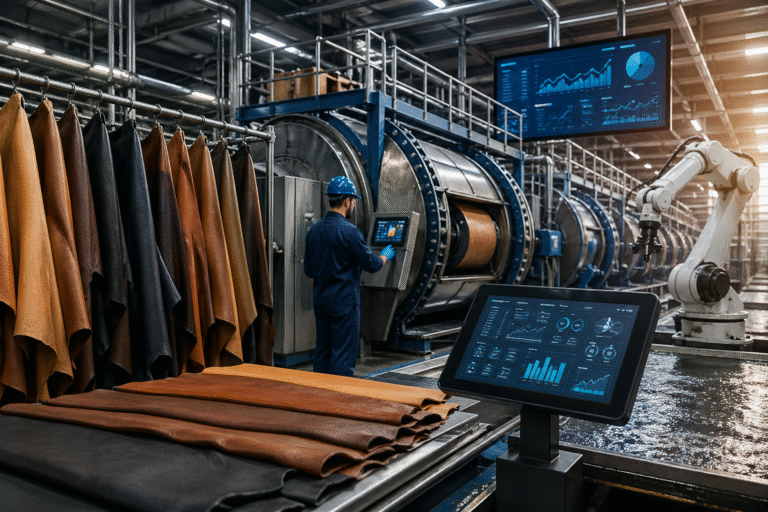
Technology improves the quality of leather production by automated thickness gauge, defect inspection and checks on uniformity, which is not the case with the manual inspection.
Digital Quality Records and Data Tracking
The inspection data is stored in digital systems thus allowing a trend analysis and continuous improvement. This enhances quality control systems of leather and decision-making.
Reducing Human Error Through Technology
Digital monitoring and automation can help in removing human error, enhancing accuracy, and promoting consistency in leather manufacturing quality control over high volume production.
Common Quality Issues in Leather Manufacturing
Inconsistent Thickness and Color Variations
This is where unevenness in the thickness of leather used, and uneven color variations are typical when leather manufacturing quality control is poor. Periodic observation can be used to avoid these issues.
Chemical Defects and Surface Problems
Brittleness, stains or weak finishes can be produced due to chemical imbalance. These defects are detected by strong quality inspection of leather.
Handling and Storage-Related Damage
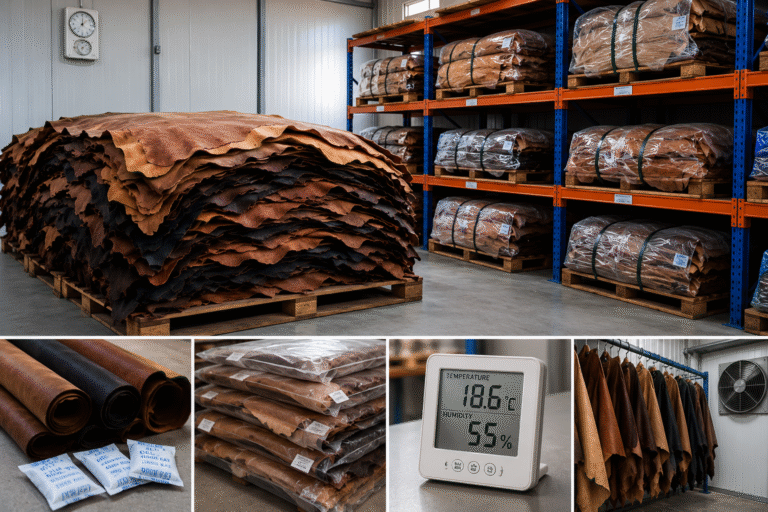
The leather may be ruined after manufacturing through poor treatment and poor storage. The quality of leather factories involves provisions to avoid such losses.
How Buyers Evaluate Factory Quality Control Systems
Factory Audits and Sample Approval
Buyers determine quality control in the manufacturing of leather by conducting audits, approval of samples, and trial order. Powerful systems create consumer trust.
Batch Consistency and Repeatability
Batch-to-batch consistency is one of the main indicators of successful quality control systems of leather and long-term reliability of suppliers.
Red Flags in Weak Quality Control Systems
The absence of documentation, quality inconsistency, and communication are warning signs. In the production of leather, buyers use quality control to alleviate risks.
Final Takeaway: Why Strong Quality Control Defines Reliable Leather Factories
Leather manufacturing quality control determines the credibility, reliability and consistency of leather manufacturers.
Well-developed quality control mechanisms safeguard the customers, minimize waste, achieve compliance, and provide the customers with quality leather that meets expectations.
In the competitive global marketplace, factories that have a strong leather quality management system are reliable in doing business.
FAQs
- Which method is used in making leather products?
Tanning, finishing, cutting, stitching, and quality inspection are some of the methods used to make leather products. These processes are used to make raw hides into strong materials that could be used in footwear, bags, furniture, as well as industrial use.
- What is an example of quality control in manufacturing?
One of the quality control measures is checking the leather thickness, color consistency, and surface defects during the production process. Strongness and flexibility are also tested in the factories to ascertain that the products are as per the standards.
- What is the commonly used machine in leather processing?
These are the common machines: fleshing machines, splitting machines, drum tanning machines and finishing spray machines. Such machines are used to manage the uniformity, cleanliness, and the thinness of leather.
- What are the raw materials used in the leather industry?
The primary raw materials include animal hides and skins, water, tanning agents, dyes, oils and finishing chemicals. It is important that raw hides are selected properly to make the leather good.
- Is K2Cr2O7 used in the leather industry?
Potassium dichromate (K 2 Cr 2 O 7 ) is not a typical modern tanning salve in leather. The common chrome tan agent is chromium sulfate. K2Cr2O7 is not a routine tanning, it is mostly applied in the laboratories to test it.