Raw leather for footwear manufacturing is a determinant of shoe performance, comfort, and durability. The use of leather in footwear is among the most challenging due to the fact that it should offer flexibility, strength, and breathability, as well as durability in constant movement and pressure.
The mistake of selecting raw leather can lead to low comfort, early cracking, high rejection rates, and uneven output.
The needs of a fashion dress and raw leather for footwear manufacturing will be quite different from sports, safety, or industrial shoes. Various kinds of shoes are unique to the kind of leather applied, and one should ensure that it makes the correct decision.
It is a guide on how to choose raw leather for footwear manufacturing by covering the types of leather, things to look at in terms of quality, inspection, sourcing, and good practices to ensure that both the buyer and the manufacturer minimize the risks and the performance of the footwear.
Understanding Raw Leather Requirements for Footwear
Why Footwear Manufacturing Needs Specialized Raw Leather
The processes of manufacturing footwear expose leather to repetitive flexion, abrasion, exposure to moisture, and heating of the body.
The raw leather for footwear manufacturing ought to be in a position to bend without breaking, not lose its shape, and also provide comfort during the period.
Footwear leather, in contrast to upholstery or some accessories, must be subject to mechanical force in all situations, and that is why the raw material of leather is required to be chosen in particular.
Raw Leather vs Finished Leather in Shoe Production
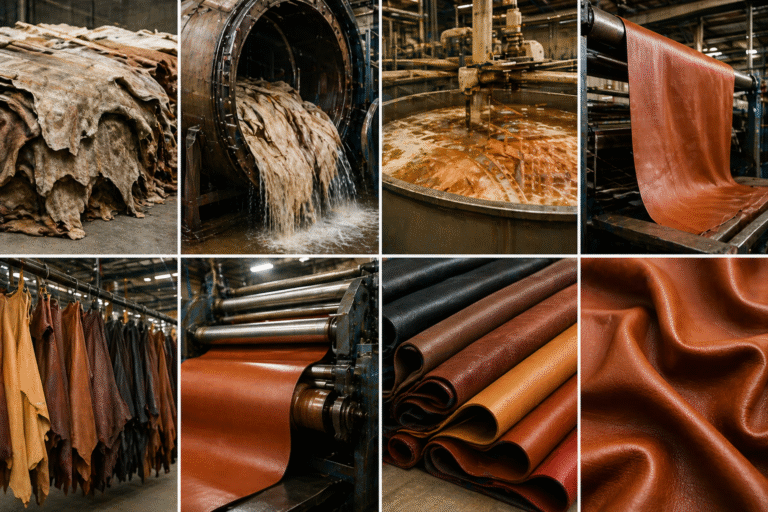
Raw leather for footwear manufacturing with a better take on tanning, softness, thickness, and finishing. Manufactured leather also reduces customization and might fail to satisfy certain leather quality needs of the feet.
The majority of manufacturers use raw leather in the production of footwear so as to customize performance features in the process.
How Raw Leather Quality Impacts Shoe Performance
Raw leather of high quality enhances the flex resistance, tear strength, breathability, and comfort. Low-quality hides cause cracking of the surface, non-uniform stretching, and low wear life.
The quality of leather will have a direct influence on the durability level of the shoe, the satisfaction of the customers, and the brand image.
Types of Raw Leather Used in Footwear Manufacturing
Cow Raw Leather for Footwear: Strength and Versatility
Cow raw leather is the most popular in footwear production because of its balanced thickness, density of the fibers, and strength. It is very good in casual shoes and in dress shoes as well as in performance shoes, and that is why it is one of thebest raw leather for shoes in various categories.
Buffalo Raw Leather for Heavy-Duty Shoes
The raw leather used in buffalo has a higher thickness and has better fiber structure, hence it is used in safety and work shoes, as well as industrial footwear. Though less flexible than cow leather, it is more durable to withstand a demanding environment.
Goat and Sheep Raw Leather for Lightweight Footwear
Lightweight shoes, fashion footwear, and linings are made with goat and sheep raw leather. Goat leather is very strong in tensile strength and flexible, whereas sheep leather is soft and comfortable but less abrasion-resistant.
Matching Leather Type to Shoe Category
The selection of the appropriate type of hide is dependent on the use of the shoes. Football and sporting shoes require more durable fibers, whereas fashion footwear is about comfort and style. When footwear is properly chosen in terms of leather, there would be no mismatch between performance and design.
Footwear Leather Quality Requirements Explained
Thickness, Weight, and Flexibility Balance
Footwear leather should be thick enough that it cannot be worn out, yet it should be able to bend over and over. Too much thickness makes it uncomfortable, and also, thin leather wears out easily. The need to reach this balance is one of the basic footwear leather qualities.
Fiber Structure and Tear Strength
The thick fibers made of interwoven fibers enhance tear strength and retain shape. Poor fiber structure causes stretching and deformation, particularly at toe bends and points at heels.
Grain Quality and Surface Consistency
Bling grain enhances beauty and minimizes the problems of finishing. Loose or damaged grain causes a rate of rejection during the cutting and lasting activities.
How to Choose Raw Leather for Different Shoe Types
Raw Leather for Casual and Dress Shoes
Dress shoes must have smooth grain, medium thickness, and regularity of cut. The considerations in raw leather when choosing raw leather for footwear manufacturing in the fashion segments are comfort, appearance, and polish response.
Raw Leather for Sports and Performance Footwear
Footwear that is used in performance requires flexibility, breathability, and fatigue resistance. Raw leather has to be subjected to special tanning without structural deterioration.
Raw Leather for Safety and Industrial Shoes
The safety shoes demand heavier hides that are more tear-resistant and have high resistance to chemicals and abrasion. Raw leather that is commonly used is buffalo and heavy cowhide.
Raw Leather Inspection Checklist for Footwear Manufacturers
Visual Inspection: Grain, Scars, and Defects
Check the uniformity of the grain, scars, brands, and tick marks and flay cuts. Defects decrease the yield of cutting and have an influence on visible shoe panels.
Physical Checks: Thickness, Stretch, and Feel
Test stretch recoverability, measure thickness consistency, and test hand feel. Overstretching results in poor fit and deformation of shoes.
Smell, Moisture, and Preservation Condition
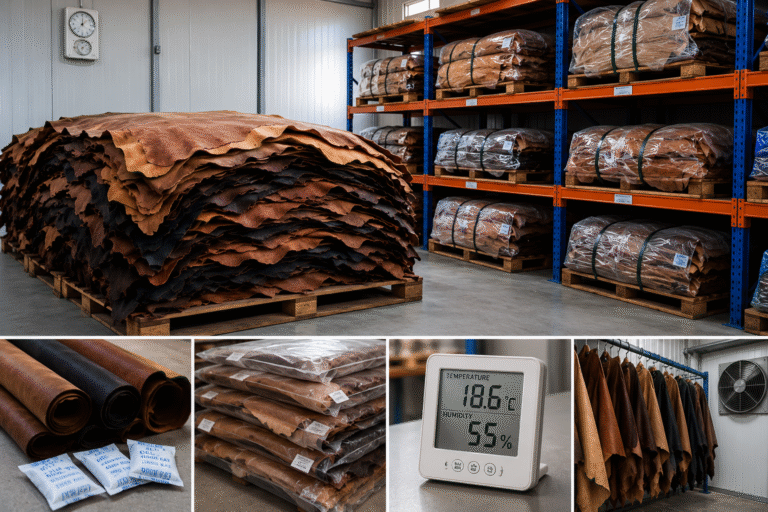
Good preservation is indicated to be poor by a strong odor, uneven moisture, or salt damage. Raw leather inspection for footwear should check on freshness and stability.
Raw Leather Defects That Affect Footwear Production
Defects That Reduce Cutting Yield
Wrinkles, scars, and holes decrease the area of use, which leads to waste and a higher cost per pair.
Defects That Affect Comfort and Fit
Free-flowing grain and lack of uniformity of thickness provoke discomfort, creasing, and early wear.
When to Reject or Downgrade Raw Leather
Hides that have extensive bacterial losses, too many defects, or poor condition should be rejected or downgraded so that production losses are not faced.
Sourcing Raw Leather for Footwear Manufacturing
Local vs Imported Raw Leather for Shoes
Domestic sourcing has a shorter lead time, whereas foreign raw leather has increased volumes and economies of scale. They both demand rigorous quality control.
Key Countries Supplying Footwear-Grade Raw Leather
The raw leather volumes that are high and are raw leather for footwear manufacturing are available in Brazil, Pakistan, India, and parts of Africa, and each country can offer a variety of quality and price profiles that are different.
Risks and Benefits of Global Sourcing
Global sourcing minimizes costs and maximizes logistics, compliance, and consistency risks. These challenges are reduced by proper sourcing strategies.
Working With Raw Leather Suppliers for Footwear
Supplier Experience in Footwear Leather
Footwear leather suppliers who have gained experience in the thickness tolerance, cutting behavior, and performance requirements are better equipped in this than the common hide traders.
Sample Approval and Trial Production
Sample approval and pilot runs assist in ensuring that the suitability is checked, after which bulk orders are established to lower the chances of rejection.
Ensuring Batch Consistency and Repeatability
Specifications and documentation guarantee the same quality of shipments.
Common Mistakes Buyers Make When Choosing Raw Leather for Shoes
Choosing Based on Price Instead of Performance
Rejection, waste generation, and losses in the long-term are likely to be high with low-cost raw leather.
Ignoring End-Use Testing
Flex, tear, and wear testing are not done, and this results in unforeseen failures of completed footwear.
Weak Communication With Suppliers
The description of specifications leads to discrepancies between what is expected and delivered.
Best Practices for Selecting Raw Leather for Footwear Manufacturing
Creating a Footwear-Specific Leather Checklist
A checklist would be used to ensure that all batches of raw leather for footwear manufacturing meet quality requirements.
Aligning Leather Selection With Shoe Design
Leather selection for footwear should be guided by design, construction method, and end-use.
Reducing Rejection Rates Through Quality Control
Both minimum inspection and feedback loop reduce defects and enhance yield.
Final Takeaway: Choosing Raw Leather That Performs in Footwear
The process of manufacturing shoes is impossible without finding the appropriate raw leather to make shoes comfortable, durable, and high-performing.
Through the knowledge of the leather type, the quality considerations, the inspection procedure, and the capacity of suppliers, the manufacturers are able to minimize the rejection rate, enhance uniformity, and provide the market with superior footwear products that match the expectations.
FAQs
- How to check pure leather quality?
Quality of pure leather is tested through checking grain consistency, natural imperfections and fiber density. True leather has a grain that is not even, slows down in terms of moisture absorption, and cannot be described as having an organic smell, but rather a chemical one. Bend testing indicates that they creep and do not crack.
- How to choose the right leather?
The selection of the correct leather is based on the final use, performance requirements, and cost. The buyers are to take into account the animal type, its thickness, the quality of grain, and the strength of its fiber. Replacement of leather properties with footwear, bags, or upholstery will help avoid failures.
- What are the raw materials for footwear manufacturing?
Footwear is manufactured using raw materials, which are raw leather, textile, rubber, synthetic polymers, foams, adhesives, and metals. Raw cow, buffalo, goat, or sheep leather is used as uppers and linings. Soles are either rubber or PU, and they serve to cushion, offer comfort, structure, and performance to many forms of shoes.
- Is 100% cow leather real?
Yes, it is 100 percent cow leather, which is cowhide leather. It means that the leather is not mixed with other fabricated materials. Nevertheless, the quality remains different depending on grade, tanning process, and finishing. Top- grain or full-grain cow leather is more durable, breathable, and ages better than highly corrected or split cow leathers.
- How to judge leather quality?
The quality of leather is measured using the consistency of grain, natural markings, consistency of the thickness, and fiber strength. Good leather is soft and not plastic, and it folds with nice creases on it. Even color absorption, odor cleanliness, and high tear resistance show that it was processed.