Leather sample approval is a very crucial process of dealing with a new leather supplier. It is the systematic way in which the buyers ensure that the leather is of quality, performance and specification before they make bulk orders. Sample approval in buyer supplier relations is a quality contract that defends on both sides.
The buyers may end up with leather that will not meet the expectations without a proper leather sample approval process.
Approval of samples makes the samples consistent, minimizes controversy, and avoids wastages caused by delays in the production process after the production of a large quantity of samples.
Why Buyers Must Follow a Structured Sample Approval Process
Risks of Skipping Proper Leather Sample Approval
The buyers are putting themselves at a high risk of going through with the leather sample approval process.
Bulk leather received may be of different thickness, colour, grain, or performance. In absence of approved samples, suppliers will interpret requirements differently and give out quality mismatch.
Such problems may lead to discarded deliveries, scrap materials and losses of money that can be averted by a reasonable procedure of sample leather.
How Sample Approval Protects Quality, Cost, and Timelines
An organized system of approving a sample of leather would safeguard the customer by ensuring the buyer fixes the standards of quality at an early stage.
It maintains the accuracy of prices, prevents rework, and has maintained production timelines. approval of the sample promotes efficiency and minimizes misunderstandings and fosters responsibility, easing the way of approval of the leather suppliers.
Step 1: Understanding Your Leather Requirements Clearly
Defining Leather Type, Grade, Thickness, and Finish
Before commencing the leather sampling procedure, the buyers should specify the type, grade, thickness and finish of leather.
The parameters are the basis of the leather sample approval process. Indefinite requirements tend to create inappropriate samples and time wastage. Definite terms will assist suppliers in bringing the right samples on board.
Communicating End-Use Requirements to the Supplier
The final uses of the product like footwear, bags, furniture, or automobiles should be made clear. This is important information that the supplier takes into consideration when choosing how to process and finish.
Effective communications at this stage enhance assessment of the leather suppliers later in the process.
Step 2: Requesting Leather Samples From a New Supplier
What Information to Share When Requesting Samples
When requesting samples, buyers must provide specifications, reference photographs, performance requirements and testing requirements.
This understanding enhances the leather sample approval process and lowers the unwarranted rewrites. An elaborate request facilitates proper approval of the leather supplier.
Types of Samples Buyers Should Ask For (Swatches, Panels, Trials)
The various types of samples have different uses. Swatches depict hue and grain, panels in test exhibited uniformity and trial samples enabled performance testing. Ordering the correct samples enhances the approval procedure of leather samples and makes it easy to make decisions.
Step 3: Leather Quality Inspection During Sampling
Visual Checks: Grain, Color, Surface, and Defects
Checking the quality of leather starts with a visual inspection. Buyers are expected to look into grain uniformity, color consistency, surface finish and visible defects. This is done to determine problems at an early stage and samples are kept within expectations.
Physical Checks: Thickness, Feel, Flexibility, and Smell
Physical check is also significant. Processing quality can be determined by thickness, softness, flexibility, and odor. These tests should be part of the quality check of leather in the leather sample approval process.
Comparing Samples Against Specifications
Agreed specifications have to be used to make comparisons of the samples. Any mono variation ought to be recorded and negotiated. This comparison enhances evaluation of the leather suppliers and prevents it in bulk production.
Step 4: Testing and Performance Evaluation of Leather Samples
Basic Buyer-Level Tests (Abrasion, Color Rub, Stretch)
Simple tests like abrasion resistance, color rub and stretch can be done by buyers. The tests confirm that it is durable and can be used in the desired application and are essential during approval of the leather sample.
When Laboratory Testing Is Necessary
In case of high-performance products or regulated products, laboratory testing is possible. Lab results are objective data that allows the approval of suppliers of leather and minimizes risks in case of the long term.
Matching Test Results With Product Requirements
The results of the tests should correspond to the requirements of the products. In case of poor results, they should be revised or different samples requested.
This measure will also make certain that the leather sample approval process results in functional and not just attractive leather.
Step 5: Leather Supplier Evaluation Beyond the Sample
Assessing Consistency, Capacity, and Technical Support
The inspection of leather suppliers extends beyond the quality of samples. The buyers have to evaluate the production capacity, stability, and technical support.
A supplier that provides good samples but is not capable of producing a consistent delivery is a potential threat.
Reviewing Compliance, Certifications, and Past Clients
Certificate of origin, compliance logs, and references give an idea on reliability of suppliers. These are significant in the ultimate leather supplier approval.
Step 6: Feedback, Revisions, and Resampling
How to Give Clear Feedback on Leather Samples
Clearly written feedback works to make the suppliers aware of the changes that should be done. Amorphous feedback prolongs the approval of the leather sample and adds errors. Certain remarks enhance performance.
Managing Sample Revisions Without Delays
The revisions must be regulated and time constrained. The efficiency of the leather sample approval process and the elimination of delays in production can be achieved through setting the number of revisions.
Avoiding Endless Sampling Loops
Unlimited sampling is time and resource consuming. An explicit leather sourcing checklist assists the purchasers in arriving at decisions to approve, amend, and/or disapprove samples decisively.
Step 7: Final Leather Sample Approval and Documentation
What Makes a Sample “Approved” for Bulk Production
A sample will have been approved when it is visually, physically and performance satisfactory. Approval must be official, in writing and accepted by both parties as a leather sample approval process sample.
Recording Specifications, Tolerances, and Reference Samples
The approved samples should be kept in the form of reference standards. Clear details about specifications and tolerances should be documented to be used in bulk manufacturing as well as inspection.
Linking Approved Samples to Purchase Orders
Approved samples must be mentioned in purchase orders. This is done to legally bind the bulk supply to the leather sample approval process samples and guard buyer interests.
Common Mistakes Buyers Make During Leather Sample Approval
Approving Samples Without End-Use Testing
It is always easy to accept samples based on their looks. Leather can either break during production or use without end-use testing.
Ignoring Batch Consistency and Repeatability
One good sample does not imply the stability of bulk supply. When analyzing suppliers of leather, buyers need to consider repeatability.
Poor Communication With New Leather Suppliers
Lack of effective communication contributes to not matching expectations. To achieve a successful leather sample approval process, documenting and following up are necessary.
Best Practices for Working Long-Term With a New Leather Supplier
Building Trust Through Clear Processes and Expectations
An open-minded leather sample approval will create trust and establish a base of long term co-operation. Stated expectations are advantageous to buyers and suppliers.
Using Sample Approval to Improve Future Orders
The lessons learnt in the process of sample approval can be used to enhance sourcing in the future. Structured leather sourcing checklist allows to make approvals easier and the results more successful in perspective.
Final Takeaway: Mastering the Leather Sample Approval Process
Leather sample approval process is an important risk management mechanism to buyers who deal with new suppliers.
When properly done, this guarantees quality, consistency and reliability in advance before bulk production commences.
This method of leather sampling process, inspection, testing, and documentation ensures the protection of the investments of buyers and effective long-term relations with the suppliers.
FAQS
- What are the steps in the leather process?
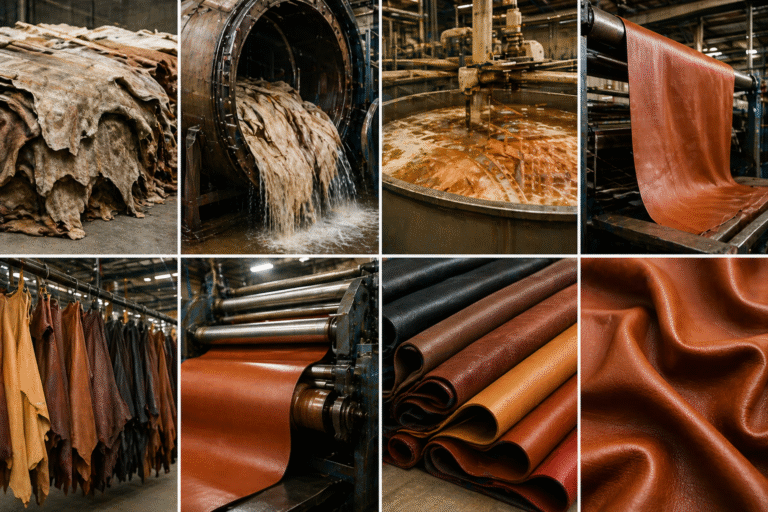
The leather making begins with the drying or salting of raw hides. Then there is the process of soaking, liming and unhairing to clean the hide. Tanning is followed by stabilizing the leather. Softness and color is enhanced with retanning, dyeing and fatliquoring. Lastly, the last process that makes leather look and act the way it does is drying and finishing.
- What are the 5 basic leather working techniques?
There are the five fundamental leather working processes: cutting, stitching, edge finishing, tooling and dyeing. The leather is cut, the pieces joined together by stitching, the edges smoothed, the tools used to add designs and the dye used to add color. Such processes are mostly applied in the production of belts, bags, wallets, shoes and other leather products.
- How to find buyers for leather products?
Trade shows, B2B, export directories, and industry networks can be used to get buyers of leather products. Buyers and suppliers also interact in large numbers via websites and social media and direct approaches. Samples, certifications, and understandable product descriptions serve to create confidence and bring long-term purchasers to foreign markets.
- What are the 4 grades of leather?
There are four typical grades of leather, full-grain, top-grain, genuine leather and bonded leather. The highest and the strongest is full-grain. Top-grain is a little corrected though hard. True leather is produced using lower layers whereas bonded leather is produced using leather scraps combined with binding materials.
- What is category 60 leather?
Category 60 leather generally means a classification of quality/grading internally amongst suppliers or purchasers. It does not constitute an all-around leather standard. Depending on the company, the meaning of the term may differ and may refer to the thickness, defect allowance, or type of use. Suppliers should be requested to provide buyers with specifications and grading criteria.