Questions from leather buyers are important in sourcing decision-making, particularly where quality, consistency, and costs are involved in the long term. Price and availability are the main concerns of many buyers who do not pay much attention to structured communication with suppliers.
Inefficient communication with the suppliers also results in poor leather quality, shipment rejections, production delays and concealed costs that harm the margins.
The right leather buyer questions ensure the quality of the products, cost management and quality delivery schedules. Clear questions assist buyers in assessing suppliers in the best way possible, facilitate expectations and minimise sourcing risks.
Why Leather Buyer Questions Are Critical in Sourcing
How Supplier Transparency Impacts Leather Quality
A leather buyer questions can help to understand how transparent a supplier can really be. Suppliers that are ready to discuss the origin of leather, how they process it, and quality control will easily come up with a consistent leather.
Transparency enables the buyers to know beforehand defects, performance constraints, and yield variations during production. In the absence of transparency, there is no certainty of the leather quality, leading to a higher risk of rejection.
Cost, Yield, and Consistency Risks Without Proper Questions
In instances where leather buyer questions are not posed, buyers would experience a loss of yields that are hidden, too much waste and improper batches.
The faulty questioning results in misunderstandings concerning the thickness tolerances, grading standards, and defect acceptance. These problems directly affect the reduction in cutting, material usage and expense of production in the long run.
Common Problems Buyers Face When They Don’t Ask Enough
Customers who do not pay attention to the critical questions of buyers usually have sample-to-bulk mismatches, discrepancies in colour, inconsistent thickness, and slow delivery. Such issues are often of poor specifications and poor supplier screening, and not the intent on the part of the supplier.
Questions About Leather Type and Specifications
What Type of Leather Are You Supplying?
Among the simplest questions that can be asked by the buyer of leather is what type of leather is being provided. Buyers must verify the type of animal, source of hides and the type of leather, be it in its raw form, wet blue, crust or finished. Imprecise descriptions would mostly produce inappropriate content to be used.
Raw Leather vs Finished Leather Clarifications
Leather buyer questions should make specific distinctions between the raw leather and finished leather. All of them are different in processing and manufacturing.
Customers purchasing raw leather should have a clear picture of the preservation technique, water content, and processing level; otherwise, the production process will be hampered.
Thickness, Grade, and Cutability Details
The questions that buyers ought to pose to the leather suppliers are in the range of thickness, grading system, as well as cutability. A minor difference may impact the yield and the performance of the product. These specifications are supposed to be objective and not subjective.
Questions About Leather Quality and Defects
What Natural and Processing Defects Are Present?
The questions to ask leather suppliers should apply to both natural defects (scars, wrinkles, bites) and processing defects (flay cuts, holes). Knowing the distribution of defects assists buyers in making cutting layouts and controlling yield expectations.
How Is the Leather Graded (A, B, C, Select)?
It is necessary to provide a clear description of the grading criteria. The questions that should be provided to the buyer of leather should establish the definition of grades and the use of either a visual or a system grading. Unpredictable grading usually brings arguments.
What Is the Expected Yield Percentage?
Immediate cost efficiency is dependent on yield. Average percentages of remaining yield after the removal of defects should be questioned by buyers of leather. High yield implies a higher quality of hides and uniform measuring standards.
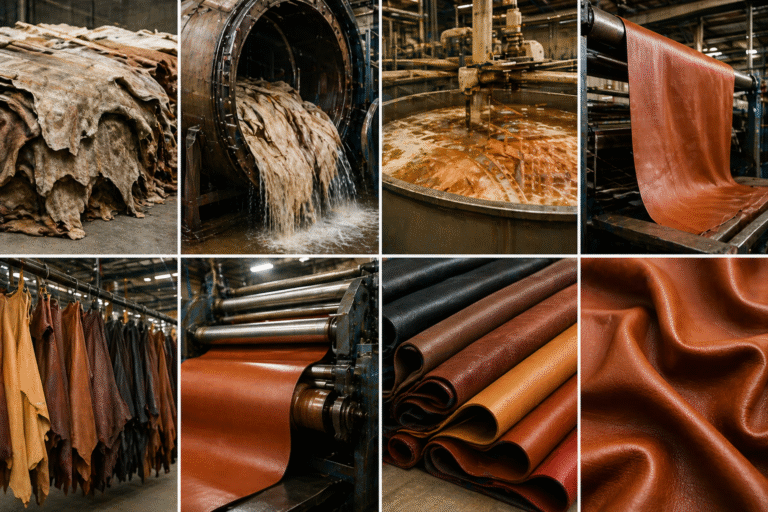
Questions About Leather Processing and Tanning
What Tanning Method Is Used?
Leather buyer questions must be to identify the type of tanning, whether chrome, vegetable or a hybrid. All techniques influence softness, tenacity, colour absorption and suitability. This is particularly important to footwear, furniture and automotive leather.
Chemical Compliance and Environmental Standards
Buyers are to have leather sourcing questions, which refer to chemical compliance or REACH standards and prohibited substances. Failure to comply may intercept the deliveries or restrict the market.
Processing Consistency Across Batches
The question about batch consistency is one of the least considered questions when it comes to leather buyers. Buyers are expected to query the suppliers on how they manage processing variables in order to achieve consistent outcomes in a series of orders.
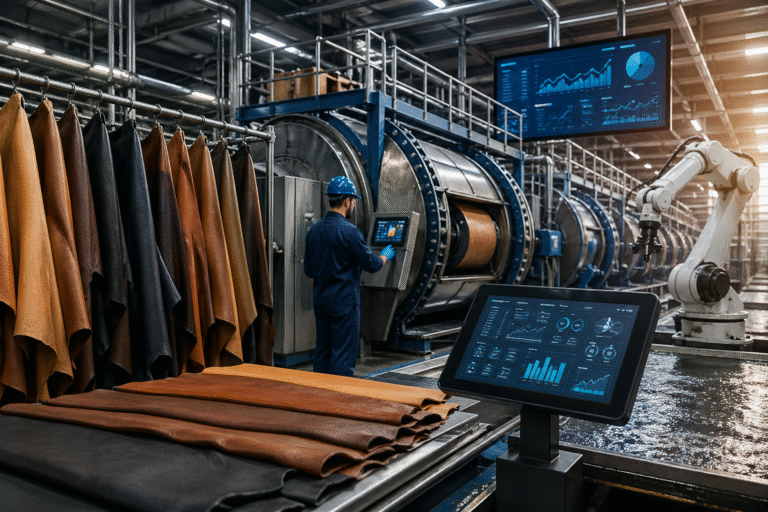
Questions About Quality Control and Inspection
Quality Checks Performed Before Dispatch
Leather buyer questions should discuss the stages of inspection before shipment. Before packing, buyers have to be aware of whether the leather is scrutinized about its thickness, defects, moisture and surface quality.
Buyer Inspection and Audit Options
Powerful suppliers embrace inspections. To minimise risk, buyers ought to enquire of their leather suppliers about on-site audit, third-party audit, or pre-shipment audit.
Handling of Rejected or Defective Batches
Leather buyer questions wants to have answered should be concerned with the handling of the defects once they are delivered. Unambiguous rejection, replacement, or credit policies guard against financial loss by the buyer.
Questions About Sampling and Approval
Availability of Representative Samples
Leather supplier evaluation is a critical process that involves sampling. Buyers must enquire whether they are, in fact, samples of bulk production and not hides picked by hand.
Matching Bulk Orders With Approved Samples
Leather buyer questions must include inquiries on how the suppliers will assure bulk leather is of the approved samples. This will avoid unexpected production costs.
Policies for Sample-to-Bulk Variations
The questions that buyers need to ask about leather sourcing are questions regarding how far the option of acceptable variation can go. Defined tolerance eliminates controversies and time wastage.
Questions About Supply Capacity and Reliability
Monthly and Annual Production Capacity
Leather buyer questions should confirm feasible supply capacity. Exaggerated capacity usually causes latency or reduced quality when the demand is high.
Batch Consistency and Repeatability
Repeat orders are critical in terms of consistency. Customers are supposed to query the suppliers on how they achieve consistency in various production batches.
Backup Plans for Supply Disruptions
Questions that are related to sourcing leather must involve contingency plans in case of shortage of the raw hides, lack of transportation or processing time.
Questions About Pricing and Cost Structure
Factors Affecting Leather Pricing
Leather buyer questions should clear up on the pricing drivers like the size of hides, grade, yield, and processing mode. Transparency eliminates cost increases that are not expected.
Yield, Waste, and Hidden Cost Considerations
Customers are prone to pay a lot of attention to the price per square foot. The leather buyer questions to be posed to the leather buyer should be regarding the level of waste, loss in trimming and the usable space to determine the actual cost.
Long-Term Pricing Stability
To maintain consistency in supply, buyers must inquire about stability in pricing and adjustment of prices to control budgets in the long run.
Questions About Logistics and Storage
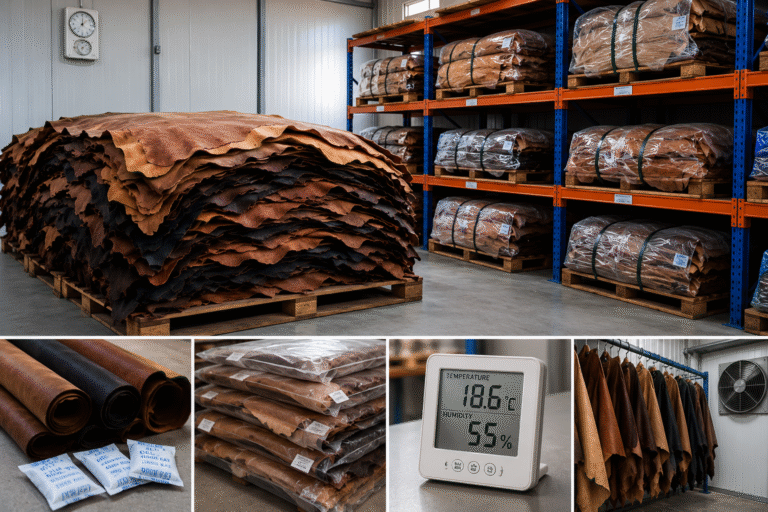
Preservation Methods Before Shipping
Leather buyer questions should ascertain the preservation of leather before shipments. Poor security causes moulds, smell and fibre destruction.
Storage Conditions and Transport Risks
leather supplier questions include questions on the conditions of the warehouse, packing and controlling of humidity during transportation.
Lead Times and Delivery Commitments
Detailed schedules of delivery assist the purchaser with production planning. Lead time and delays penalty should be defined by the leather buyer’s questions.
Questions About Compliance and Documentation
Certifications and Test Reports
Questions to be asked by leather buyers must seek test reports, certifications and compliance paperwork of target markets.
Traceability of Raw Hides
The issue of traceability is becoming more critical. Questions that buyers should ask when sourcing leather include questions on the source of the hides and transparency in the processing.
Export and Regulatory Documentation
Lost documents lead to delays in the shipments. Purchasers need to ensure that they have completed export documentation.
Questions to Evaluate the Leather Supplier Relationship
Supplier Experience With Similar Buyers
The questions to be asked by the buyer of leather should determine the experience that the supplier has with similar industries, products and quality expectations.
Communication and Technical Support
It should have reliable communication. The buyers must enquire how technical problems, complaints, and changes are managed.
Willingness to Improve and Customize
Good suppliers adapt. The questions to be asked by leather buyers must also assess the flexibility and mindset of a long-term partnership.
Red Flags Buyers Should Watch for
Vague Answers and Missing Documents
Ambiguous answers are indicative of danger. Questions from the leather buyer will be useless when answers are not detailed or recorded.
Resistance to Sampling or Inspection
Quality problems are usually concealed by suppliers who do not sample or perform audits. This is a major warning sign.
Inconsistent Specifications
Alteration of specifications in one or more conversations suggests weak internal controls and ineffective manufacturing.
Creating a Leather Buyer Question Checklist
Pre-Sampling Questions
The following questions ensure that one is not investing in sampling and testing in vain.
Pre-Order Approval Questions
Alignment must be checked before bulk production is done.
Long-Term Supplier Evaluation Questions
Continuous monitoring ensures that the performance of the suppliers is in line with the business objectives.
Final Takeaway: Smart Leather Buyer Questions Reduce Risk
Formatted leather buyer questions turn sourcing into a managed process rather than a guided process.
The buyers minimise waste, safeguard margins, and enhance consistency by means of a transparent checklist of buying and concentrating on the transparency, quality control and supplier assessment.
The right questions will establish trustworthy supplier relationships that contribute to the success of the business in the long run.
FAQs
- How to know if leather is good quality?
Good quality leather has the natural grain, the same thickness, and a soft but firm touch. It must be able to bend and come back. There is a positive smell of a small amount of artificial coating used, a slight smell of leather and noticeable natural variations.
- How to know if a product is genuine leather?
Real leather is normally unevenly grained, slow to absorb moisture and smells like a natural one and not a chemical one. The boundaries are fibrous, not plastic. Labels, burn tests (carefully done), and supplier documentation can also assist in verifying authenticity. Artificial leather can be extremely monotonous and not as comfortable.
- What are the 5 uses of leather?
Footwear, bags and accessories, furniture upholstery, automotive interior, and industrial or safety products are all typical products that are covered with leather. It is strong, flexible and durable and hence suitable to use in fashion and functional applications. Diverse types of leather are chosen according to the requirements of performance, comfort, and other requirements of longevity.
- What are 10 things made of leather?
Leather is used to make shoes, handbags, wallets, belts, jackets, sofas, car seats, gloves, watch straps and saddles. These products have the advantage of the durability of the leather, comfort and a high look. The type of leather used will depend on whether the item requires softness, structure, or high wear resistance.
- How to tell if leather is expensive?
Leather that is of high cost tends to have natural grain, little surface coating and uniformity in thickness. It is as soft as possible and resilient, and does not peel as it ages. Luxury leather is usually accompanied by documentation, transparent sourcing, and increased yield. Too smooth a texture or artificial shine is a sign of lesser quality leather.