Buyers must have clear specifications for leather to guarantee steady quality, accurate pricing, and easy relationships with dealers. And in this case of verbal, imprecise communication of the leather requirements, people will very soon find themselves confused and lost, resulting in rejected shipments, production delays, and financial losses.
A properly designed leather sheet removes all ambiguity, since, before an order is placed, technical, quality, and performance expectations are well-defined.
A leather specification sheet serves as a point of reference in a contract between buyers who require raw, wet blue, crust, or finished leather. It brings the suppliers, quality team,s and production planners to the same standards.
What Is a Leather Specification Sheet?
Leather Specification Sheet Meaning and Purpose
A leather specification sheet is a formal paper specifying all technical, quality, and compliance requirements of a leather order. It defines the type of leather, grade, thickness, defect limit, processing level, and performance anticipation.
A leather sheet is meant to bring about consistency in the delivery of leather by the supplier to meet the expectations of the buyer with all the batches.
Why Verbal Instructions Are Not Enough in Leather Buying
Verbal directions are open to interpretation and are subjective. In the absence of a written leather sheet, suppliers will be able to assume grade, tolerances, or finishes.
Who Should Use Leather Specification Sheets
Manufacturers, importers, brands, sourcing managers, quality teams, and buying agents should use leather specification sheets. Any company that makes repetitive or bulk leather orders enjoys the advantage of standardized leather order specifications, which ensure uniformity and responsibility.
Why Leather Buyers Need a Specification Sheet
Reducing Quality Disputes With Suppliers
A specifications sheet of leather is detailed, which helps to minimize controversies by specifying what is possible and what is not.
Quality claims can be resolved when both parties agree on specifications at the beginning of the project, and the specifications are documented instead of being based on subjective views.
Improving Consistency Across Bulk Orders
Regularity is essential in bulk leather procurement. A leather specification sheet makes sure that all the shipments are to be on the approved version, even when production is distributed over time or over batches. This is necessary to ensure that products have a consistent quality.
Protecting Cost, Yield, and Production Timelines
Inappropriate leather specifications tend to lead to a decrease in yield, reprocessing, or halts in production. Clear leather specifications of orders safeguard margins because they offer usable space, proper thickness, and predictable working beforehand.
Key Components of a Leather Specification Sheet
Leather Type and Animal Origin
The leather specification sheet should be clear on the animal source: cow, buffalo, goat, sheep, etc. All types have different behaviors during the processing and influence strength, flexibility, and yield.
Raw Leather vs Finished Leather Requirements
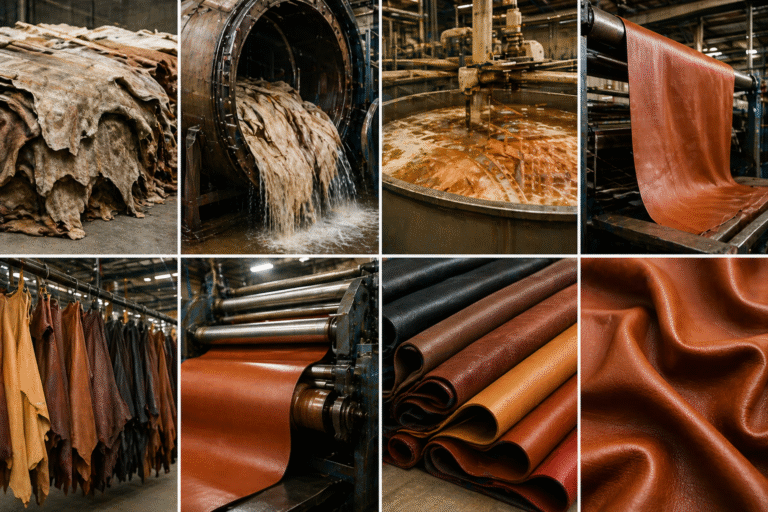
Buyers have to specify the type of order. raw leather, wet blue, crust, or finished leather. The specifications of a leather product must be precise in the level of processing to prevent expensive wrongful understanding.
Leather Grade and Acceptable Defect Levels
The documentation of the leather grades (A, B, C, Select) and allowable defect limits should be done. In the absence of this, the suppliers can supply leather which, in a technical sense, is in line with quantity specifications but does not meet the usability standards.
Defining Technical Leather Specifications Clearly
Thickness, Weight, and Measurement Tolerances
The leather specification sheet should be able to mention its thickness ranges and tolerances. Buyers need to specify minimum, maximum, and acceptable variation values so that they can process compatibly.
Size, Area, and Cutting Yield Expectations
Leather order specifications must have a minimum usable area and a predicted yield percentage. This ensures that buyers are not supplied with too much loss of trimming on leather.
Moisture Content and Preservation Requirements
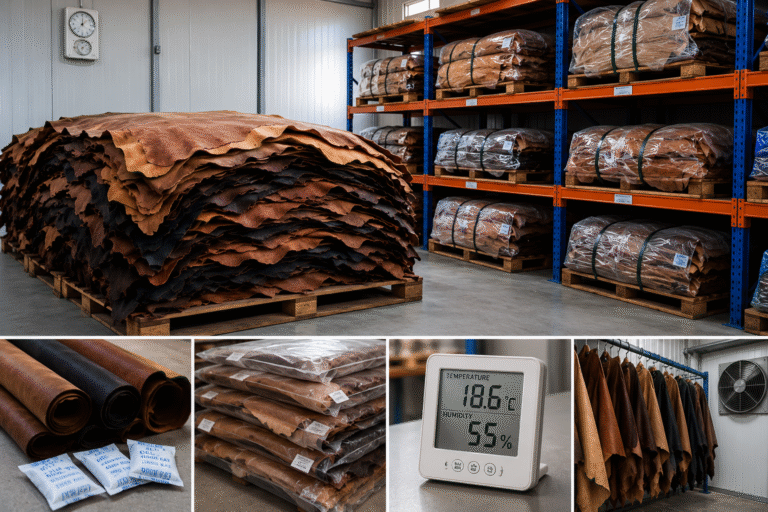
In the case of raw and semi-processed leather, moisture constraint and preservation procedures need to be stipulated. Poor moisture conditions may result in mould, smell, or loss of fibre.
Processing and Tanning Specifications
Tanning Method (Chrome, Vegetable, Hybrid)
The leather specification sheet should be clear with regard to the tanning method. Chrome, vegetable, and hybrid tanning have varying properties that have a direct impact on the end-use performance.
Chemical Compliance and Sustainability Requirements
The requirements of REACH, ISO, OEKO-TEX 4, or buyer-specific compliance requirements should be specified in the leather product specification by buyers to ensure adherence to the regulatory and brand standards.
Wet Blue, Crust, or Finished Leather Stage
The suppliers have to be aware of the required processing stage. Uncertainty at this stage usually causes wrong deliveries and loss of production.
Appearance and Performance Specifications
Grain Type, Texture, and Surface Finish
Grain type (full grain, corrected, embossed), texture, and surface finish expectations should be spelled out on the leather specification sheet to eliminate visual variation.
Color, Shade Tolerance, and Dye Penetration
Colors, color tolerance limits, and depth of dye penetration need to be recorded to prevent observable changes between batches.
Performance Requirements Based on End Use
The performance requirements, including the abrasion resistance, tear strength, flexibility, or UV resistance, should correspond to the desired use.
Defect Tolerance and Quality Acceptance Criteria
Acceptable vs Rejectable Defects
The leather specification sheet must be explicit on the list of acceptable natural defects and rejected defects. This will eliminate subjective quality-of-delivery.
Yield Percentage and Cutting Efficiency
Minimum-yield definition helps sellers to avoid wastage of materials as well as guarantee the predictability of the material usage.
Rejection, Replacement, and Claim Handling
Leather sourcing documentation must have clear procedures on rejection, replacement, and claims to prevent disputes.
Testing and Compliance Requirements
Physical and Chemical Test Standards
Indicate necessary tests like tensile strength, tear resistance, colorfastness and limits of chemical residues.
ISO, REACH, and Buyer-Specific Compliance
All the necessary certifications and regulatory standards needed regarding the order should be listed in the leather specification sheet.
Test Frequency and Documentation
Establish the frequency of tests and the required documentation to be made with the shipments.
Sample Approval and Reference Standards
Linking the Specification Sheet to Approved Samples
Accepted samples should be directly mentioned in the leather specification sheet in order to get the bulk production to meet their expectations.
Sample Storage and Reference Control
The buyer and the supplier ought to have some samples to refer to in case of disputes.
Matching Bulk Production to Sample Specs
The leather specification sheet is the linkage between approved samples and bulk deliveries.
Common Mistakes Buyers Make in Leather Specifications
Overlooking Defect and Tolerance Limits
The lack of a definition of limits creates an excessive number of interpretations.
Using Generic or Incomplete Specs
Generic specifications fail to indicate actual end-use requirements and, in most cases, lead to inappropriate deliveries of leathers.
Failing to Update Specs Over Time
Leather specifications need to be modified with the product, regulation, and performance feedback.
Leather Specification Sheet Template (What to Include)
Basic Information Section
Supplier information, order number, type of leather, and processing stage.
Technical and Quality Specification Section
Thickness, grade, defects, performance requirements, and compliance standards.
Approval, Version Control, and Sign-Off
Accountability is taken care of by version tracking, approval signatures, and revision history.
Best Practices for Using Leather Specification Sheets
Sharing Specs Clearly With Suppliers
Make sure that suppliers have complete knowledge of the leather specification sheet and that they accept it.
Aligning Specs With Purchase Orders
Purchase orders should be matched with the leather order specifications in order to prevent conflicts.
Reviewing and Improving Specs After Each Order
Constant enhancement provides stability in the leather supplier communication and the reliability of sourcing.
Final Takeaway: Clear Leather Specifications Prevent Costly Mistakes
The most efficient risk-management tool for a buyer is a leather specification sheet. It converts expectations into quantifiable norms, enhances supplier performance, and defends cost, quality, and schedules.
FAQs
- How do you create an effective spec sheet?
The existence of a clear product requirements definition, technical specifications, quality standards, and acceptance criteria will mean a well-functioning spec sheet. It has to include the material type, measurements, tolerances, performance requirements, and requirements.
- How to prepare a specification document?
In order to prepare a specification document, one must begin with the end use and performance requirements of the product. Record every technical specification, like materials, sizes, grades, tolerances, and testing specifications. Encompass quality assent criteria, adherence needs and approvals. The document should be structured, understandable, and shared with all the stakeholders.
- What are the 4 types of specifications?
There are four key specifications, namely performance specifications, design specifications, material specifications, and process specifications. Performance specs: performance specifications deal in results, design specification deals in precise construction, material specifications deal with raw materials, and process specifications deal with production or handling specifications. Every type has a dissimilar control and communication purpose.
- What is a specification checklist?
A specification checklist is a list of all technical, quality, and compliance specification requirements, which shall be determined before order placement. It helps the buyers in ensuring that none of the crucial information, such as the nature of materials, tolerances, defect limits, or test specifications, is omitted.
- What are the 5 C’s of specification writing?
Specificity writing has 5 C’s, which comprise clarity, completeness, consistency, correctness, and conciseness. Specifications must be easy to understand, contain all the requirements, be uniform throughout the documents, and be specific in technicality and unnecessary wording.