To get the leather product that would stay decades in its looks, comfort, and value, leather care is necessary. Leather is a natural material that graces with old age when properly maintained, but decays rapidly when poorly maintained. Lack of proper leather care causes cracking of leather, fading, stiffness, stains, and permanent damage that reduce the life span of the product.
Leather lasts longer when properly maintained as opposed to disposable materials. Maintaining leather is much more economical than getting replenishment of the damaged leather goods, particularly furniture, footwear, bags, and automotive interiors. Most individuals clean leather the wrong way, or they do not do it at all, unaware of the fact that they are expediting the process of wearing leather.
The guide is intended for homeowners, buyers, brands, professionals, and anybody who owns leather products. You will get to know the leather care tips, knowledge of cleaning leather without harming it, information on conditioning leather, preventing damage to leather, and proper storage of leather.
When properly taken care of through the right leather maintenance techniques, good leather care can be useful, beautiful, and last for generations.
Understanding Leather and Why Proper Care Matters
What Leather Is Made Of and Why It Needs Care
Leather is produced by using animal hide, which consists of natural collagen fiber. The moisture balance and protection of these fibers are required in order to be flexible and strong.
The fibers lose their moisture and become weak, and eventually become cracked without taking good care of the leather.
How Leather Ages Naturally Over Time
Natural patina can be described as a natural soft lustre and character found on leather that has been well kept. Adequate leather care retards the process of aging, and neglect leads to the rapid, untimely degradation and loss of strength.
Common Causes of Leather Damage
The most common causes of early failure of leather would be: moisture, UV exposure, heat, dirt, body oils, improper cleaning, and lack of conditioning.
Leather Care Basics Every Owner Should Know
Leather Care vs Leather Cleaning vs Leather Conditioning
Leather conditioning, leather cleaning, and leather protection are part of the leather care. Dirt is removed by cleaning, oils are replenished by conditioning, and damage is prevented by leather protection. Omission of any of the steps undermines the general maintenance of leather.
How Often Leather Should Be Maintained
To maintain the well-being of leather, light cleaning after every few weeks and conditioning after every 3-6 months should be done. The more used items should be taken care of in leather more often.
Mistakes That Shorten Leather Lifespan
Excessive cleaning, application of harsh chemicals, improper application of oils, and neglecting conditioning decrease the life of leather.
How to Clean Leather Safely
Dry Cleaning vs Wet Cleaning Methods
The best and safest way of leather care is through the use of dry cleaning as a routine. It includes cleaning the surface dust, dirt, and debris with a cloth made of microfibers, a horsehair brush, or a vacuum with a brush attachment.
This is done to prevent the overexposure of leather fibers to moisture, which can damage collagen structure with time.
Wet cleaning is minimally applied only when there is a spill or noticeable stain. Then, continue with the wet cleaning of leather, but in this case, wet clothes should not be used; a piece of cloth should be considered slightly wet, though not wet, and leave it to dry in the open air.
Too much moisture on leather leads to swelling, stiffness, and ultimate cracking of the fibers, and in the long run, this can only be prevented when moisture exposure to leather is regulated.
Using Leather Cleaners vs Household Products
Cleaners used on leather are designed in such a way that they do not remove the necessary oils on the hide. Such products facilitate the maintenance of the natural pH of leather in order to ensure the leather does not fade, and it also does not become spoiled on the surface. Conversely, soap, detergent, alcohol, vinegar, or disinfectants, which are found in the domestic sector, dissolve protectors and natural fats, leading to early aging.
Even non-strong cleaning chemicals used in the house may damage leather permanently by discoloring, becoming hard, or peeling.
Proper leather care products will guarantee a safe cleaning that does not affect the flexibility, color, and durability of leather.
How to Clean Different Types of Leather
Various cleaning methods need to be applied to various types of leather. Finished and smooth leather will withstand light wiping with a damp cloth and leather cleaner.
Never have suede or nubuck wet-cleaned, but brush and erase with suede brushes and erasers in order to remove dirt, and never destroy the nap.
Aniline leather is easily absorbent and should be washed very tenderly. Different types of products that involve leather require the knowledge of how to clean leather, depending on the finish of the leather, to avoid irreversible damage and be able to maintain the leather properly.
How to Protect Leather From Damage
Protecting Leather From Moisture and Water
Moisture is one of the threats to leather. Leather protection sprays offer a breathable barrier that can be used to keep out water, spills, and humidity without sealing the pores. The sprays are especially important with footwear, bags, and furniture that have to be used on a daily basis.
In the case of wet leather, the spray must be allowed to dry in the air at room temperature. Under no circumstances should the sources of heat, like hair dryers or radiators, be used because very fast, the drying process will cause a shrinkage and cracking. A leather cover that is well-maintained reduces corrosion and moisture considerably.
UV, Heat, and Sunlight Protection
The color of the leather is washed, and when exposed to the sun, the fibers dry. The UV radiations decompose the natural oils in leather, resulting in stiffness of the leather and cracking of the surface.
Furniture made of leather should never be in the vicinity of windows, direct sunlight, or artificial heat. The reduction in sun damage is done by using UV-protective leather conditioner and rotating furniture.
Protecting the leather against heat and UV rays is one of the basic leather care practices since it is a long-term care practice.
Preventing Cracks, Stains, and Color Fading
When leather loses moisture balance or is in contact with pollutants, cracks, stains, and fading are experienced. Frequent conditioning helps to keep fibers supple, whereas leather protection items decrease the uptake of stains.
The instant spills should be blotted without rubbing, or they leave permanent marks. The best way of maintaining leather appearance and strength with time is by providing it with a routine cleaning, conditioning, and protection.
How to Condition Leather Properly
Why Leather Conditioning Is Necessary
Natural oils that are lost during use, washing, and exposure to the environment are replaced by leather conditioning. In the absence of conditioning, leather fibers will end up drying up, becoming brittle, and ultimately cracking.
Conditioning provides elasticity, softness, and wear resistance. Conditioning is always a prevention measure of proper leather care and never a cure once the damage has been done.
Oils, Creams, and Conditioners Explained
Leather conditioners are specially made emulsions based on penetrating fibers evenly. Conditioners made of cream provide controlled absorption, and oils may saturate leather when used improperly. The dark color of heavy oils is permanent and hinders the structure by blocking the pores.
With the help of balanced conditioners manufactured with leather in mind, it is possible to be nourished without interference of breathability or strength.
How Often to Condition Leather Products
Conditions of most leather products are to be done every half a year or six months. Those items that are subjected to high usage, dry climates, or constant washing may need to be conditioned more often.
Excessive conditioning is not always good and results in the accumulation of residue and corrupted finishes. It is a matter of regularity and not over-caring about leather.
Leather Maintenance by Product Type
Leather Shoes and Footwear Care
Shoes made of leather are subjected to continuous flexing, wetness, and friction. Cleaning now and then eliminates dirt that decays fibers, whereas conditioning maintains leather’s softness.
When shoes are left to rest between wears, they will stop the collection of moisture and the smell.
Shoe trees are useful in preserving shape and decreasing creasing, which increases the life of footwear to a great extent.
Leather Bags, Wallets, and Accessories
Bags and other accessories require a little soft cleaning and frequent conditioning to retain their structure and appearance.
Overloaded bags place bags on the leather seams, and negligence places bags on the surface, leading to wear and tear. Spills and stains will be prevented by applying protective sprays, especially on items that are mostly used.
Leather Furniture and Upholstery Care
The leather used in furniture is also to be vacuumed frequently in order to get rid of abrasive dust particles. To prevent drying and cracking, bi-annual conditioning will be used, especially in climate-controlled environments. Rotating cushions and shading off the direct sunlight will even ensure aging and color retention.
Automotive Leather Interior Maintenance
The leather that is used in the automotive industry is exposed to excessive heat, sunlight, and friction. Regular light cleaning of the surface will take away the sweat and oils and the conditioner will not leave the surface slippery as it has low residue.
Dashboards and seats should have UV-protective products to avoid fading and breakage of surfaces.
Storing Leather Correctly for Long-Term Use
Ideal Storage Conditions for Leather
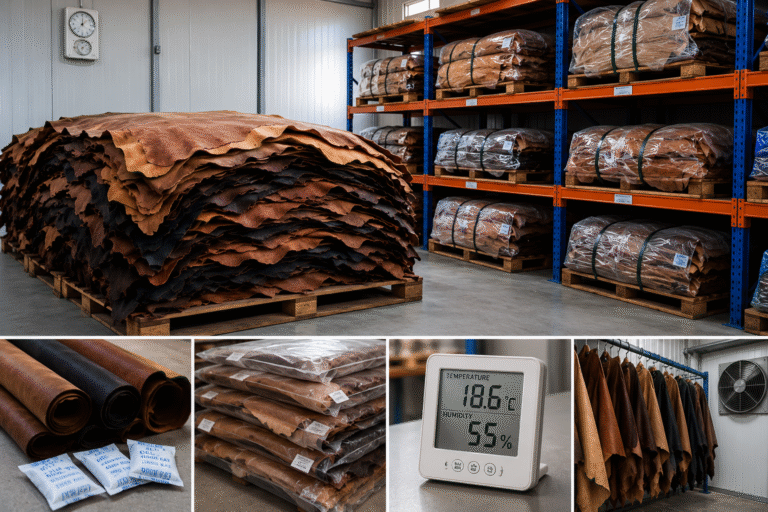
Leather must be kept in cool and dry places with free air movement. Optimal humidity conditions will prevent drying and mold.
Breathable covers are chosen instead of plastic, which traps moisture. The stable conditions sustain the fiber of leather and the quality of its surface during storage.
Preventing Mold, Odor, and Drying
Mold grows in damp, stuffy areas, whereas dryness takes place in excessively dry places. In order to create a balance using silica gel packs or humidity control solutions can be used.
Do not store leather when dirty or wet because it promotes the growth of bacteria and the development of odours.
Seasonal Storage Tips for Leather Products
Cleaning and conditioning of leather should be done before long-term or seasonal storage in order to stabilize the fibers. Goods must be packed loosely to prevent creasing and deformation.
One of the most important parts of good leather care, which has been noticed but not paid proper attention to, is proper preparation before storage.
Natural vs Synthetic Leather Care Differences
Caring for Full-Grain and Top-Grain Leather
Full-grain and top-grain leather are natural materials that are composed of animal hides, and this implies they do not have closed pores and living fiber structures.
These leathers have to be cleaned on a regular basis to remove the surface contaminants and conditioned regularly to revitalize oils that are worn out as they get used and exposed to the environment. Natural leather requires proper maintenance since it becomes rigid and cracks without proper leather care.
Regular leather care procedures will maintain grain integrity, natural texture, and long-term strength. As opposed to its synthetic counterparts, fine natural leather reacts well to care and also gets better with age.
PU, Bonded, and Vegan Leather Care Limits
PU, bonded, and vegan leather, otherwise referred to as synthetic leathers, are surface-coated fabrics that are not absorbent of conditioners or oils. Although they need less conditioning, they peel, crack, and break down on the surface more easily with time.
Synthetic leathers can be cleaned by wiping with mild cleaners; however, once the coating gets worn out, there is not much that can be done to repair them.
The synthetic materials are not able to develop patina or to be improved with time; thus, their life cycle is much shorter than that of natural leather.
Why Natural Leather Requires Specialized Care
The natural leather is porous and breathable, hence it absorbs moisture, oils, and conditioners. This makes it sensitive to good treatment of leather but sensitive to negligence or bad treatment.
The aging process of natural leather is influenced by temperature, humidity, sunlight, and use. The fiber’s health, suppleness, and the inner structure of the hide are all improved by the specific leather treatment.
Because synthetic materials cannot undergo this degradation process, natural leather requires and merits careful care.
Common Leather Care Problems and Solutions
Fixing Dry, Cracked, or Stiff Leather
The loss of moisture that causes dry or stiff leather and a lack of conditioning are the causes of the results.
The most secure measure is the step-by-step rehydration with the leather conditioners that are applied in thin layers. Rapid solutions like heavy oils, heat, or soaking do even more harm to it by weakening fibers and changing texture.
The flexibility of leather needs time, controlled conditioning, and the most effective way of maintaining flexibility in a leather belt is to store it in a manner that would avoid future drying.
Removing Stains and Odors Safely
The use of Blotting to avoid absorption of stains must always be done using a clean, dry cloth. Stains are more deeply absorbed when rubbed.
To eliminate odor, it is possible to put leather-safe deodorizers or baking soda in the vicinity, but not on leather, to counter the smell.
Chemicals that are harshly harm finishes and must never be used. Effective leather maintenance is the process that involves the safe removal of stains and odors.
When Leather Needs Professional Treatment
There are those problems that need professional intervention. Household products cannot repair deep cracks, mold growth, loss of dye, or extreme stiffness.
Restoration of damaged leather is done by expert leather technicians who carry out controlled treatments, recoloring, and other special tools. Early intervention by experts averts incurable loss and permanent impairment of value.
Leather Care Myths That Damage Leather
Oils That Harm Leather Over Time
The oils used in the household, like olive oil, coconut oil, and petroleum-based products, destroy leather fibers forever. These oils saturate the pores, attract dust, unevenly darken leather, and weaken the structural integrity.
Conditioners that are specific to leathers only should be utilized since they are designed to feed the fibers without creating accumulation and decay.
Water and Soap Misconceptions
The effect of moisture is mostly misinterpreted and assumed to be harmless, but after water has saturated leather, the fibers become tender, hard, and even crack after being dry. Soap dissolves natural oils and disfigures finishes on the surface.
Leather must never be wetted down or washed with soap. A safe way to take care of leather is by keeping it dry and using special cleaners.
Over-Cleaning and Over-Conditioning Risks
Excessive maintenance is as bad as not maintaining. Excessive cleaning takes off the protective finishes, and excessive conditioning stuffs up the pores and over-softens leather.
The balanced leather care schedule makes sure that the leather is strong, flexible and looks good without structural damage.
Best Practices to Make Leather Last for Decades
Creating a Simple Leather Care Routine
Leather does not require complicated routines to be kept in good condition. Frequent dusting, periodic cleaning, conditioning of leather every season, and good storage suffice to keep the quality of leather.
Regularity is greater than frequency. A basic routine that is repeatable avoids damage and increases lifespan.
Using the Right Products for Your Leather
Leather care Products should be related to the leather type, finish, and the environment of usage. Aniline leather needs milder treatment compared to pigmented leather, whereas automotive leather needs UV-protection.Wrong choice of products does more harm than good, and informed product choice is paramount.
Long-Term Cost Savings of Proper Leather Care
Leather lasts for a long time and ensures that the replacement costs are cut down and that the resale remains intact. Leather care can also reduce the number of repairs, and the appearance is restored over time.
An investment in leather care products and routines provides both great long-term financial and functional returns.
Final Takeaway: Leather Care Is an Investment, Not a Task
The maintenance of leather is not a short-lived activity; it is a long-term investment in quality, comfort, and value.
Surfaces are not damaged in the process of proper cleaning, the flexibility is maintained by conditioning, protection against environmental stress is maintained through protection, and structural integrity is preserved through proper storage, respectively.
Leather acquires substance, strength, and attractiveness with proper care. Regular leather care advice is also the source of not only increased longevity but also improved performance and appearance. Proper maintenance of leather makes it a high-end product that can bring in lifelong value for decades.
FAQs
- What is the lifespan of real leather?
With proper care, real leather may last as long as 30-100 years. Frequent cleaning, moisture and sun protection, and proper storage are very important in prolonging the life of leather as well as keeping its strength, comfort, and beauty intact.
- How to clean 100 year old leather?
Washing of old leather, which is 100 years old, should be done with extreme care. It should first be treated using dry cleaning techniques without utilizing water and harsh chemicals. Deteriorated, fragile, and old leather fibers are better avoided by using specialized leather restoration products or professional conservators to ensure that there is no irreparable damage to the fibers.
- What is the best way to store leather long term?
Leather must be kept in a cool, dry, and well-ventilated room without direct sunlight exposure. Keep a lid on, keep humidity constant, and not in a plastic bag to ensure that there is no growth of mold, drying, cracking, or unpleasant smell or smell during storage.
- Can leather last 100 years?
Yes, top-grade leather could last through 100 years, provided that it is cared for. Historical leather items prove that proper cleaning, conditioning, and storage of leather make it able to keep its structure, flexibility, and look even over a generation and still show very little deterioration.
- What is the best product to preserve leather?
Leather-specific conditioners and protectants are the most effective products to maintain leather as they feed the fibers without blocking pores. The products replenish natural oils and enhance flexibility, and defend against drying, cracking, and environmental damage with time.