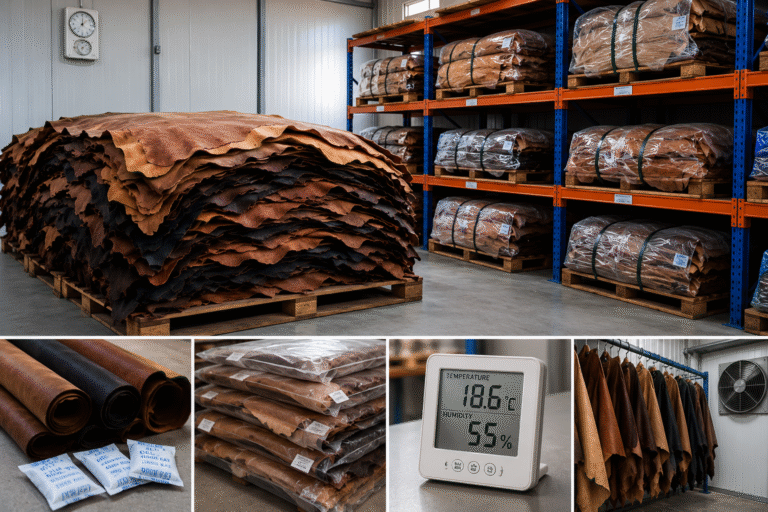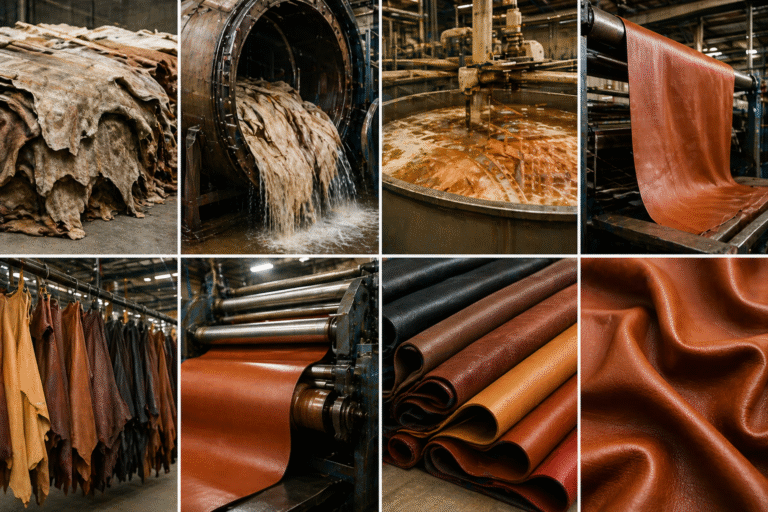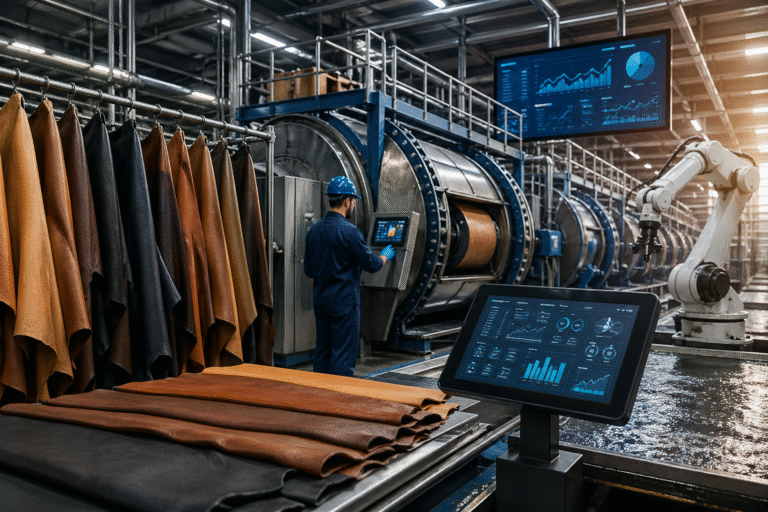
It is important to know how to evaluate leather quality prior to purchase by the importers, manufacturers and retailers. Purchase of leather without adequate inspection may result in defects, failure to last and also loss of money.
The leather of poor quality might appear good at the beginning but turn out in processing or usage. Knowledge on how to evaluate leather quality assists customers to regulate prices, performance of products, and brand reputation. The quality of leather has a direct impact on the durability, comfort and long term value.
Leather Quality Checklist: What Buyers Should Always Check
Visual Inspection of Leather Surface and Grain
Visual inspection is the initial process in how to evaluate leather quality. Test the surface of leather in terms of patterns of the natural grains, the evenness of surface, and availability of pores.
The leather is of high quality and has even grains not embossed with unnatural figures. This step forms a major section of any leather quality checklist by professional buyers.
Checking Color Uniformity and Finish Quality
Poor dye penetration or hurried processing are manifested by uneven color. how to evaluate leather quality, one should always have a closer look at the color consistency in good light.
An effective leather inspection checklist has to check on patchy finishes, streaks or too much surface coating.
Identifying Visible Defects and Imperfections
Scars, cuts, wrinkles and holes decrease useful space and prices. Determination of the quality of leather involves detection of these flaws at an early stage. Small natural marks are admissible but too many defects indicate low-quality leather.
Leather Inspection Checklist for Physical Properties
Testing Thickness, Weight, and Consistency
Consistency of thickness plays a very vital role during “how to evaluate leather quality”, to be purchased. Measure several areas so that they are similar.
Lack of consistency on the thickness can lead to problems in processing.This is an important step in the type of leather checklist deployed when it comes to bulk purchase.
Flexibility, Softness, and Hand Feel Assessment
Flexibility is determined by bending and stretching the leather gently. Leather is of good quality and bends easily without cracking.
The knowledge of how to evaluate leather quality involves examining softness and strength particularly in upholstery and as an upholstery fabric.
Smell Test and Odor Indicators of Poor Processing
Leather is supposed to have a natural smell. Unpleasant odors of a strong chemical or rotten nature are an indication of bad tanning or storage. One of the easiest yet significant sections of checking the quality of leather is smell testing.
How to Check Leather Quality Through Simple Tests
Water Absorption and Surface Reaction Test
Use a drop of water that is small in size. Leather that is of high quality takes time to absorb water whereas leather that is coated is water resistant. This test aids in quality verification of leathers in the pre purchase test.
Stretch, Tear, and Strength Check
Elasticity – Place the leather lightly stretched. Leather is made of quality that stretches a bit and rests. Leather that is weak or brittle does not pass this test rendering it inapplicable in the demanding applications.
Scratch and Crease Resistance Test
embodied in a fingernail pressed in leather. Real leather has slight marks which disappear on its own. Getting permanent scratches indicate that there is improper processing or excessive surface correction.
Leather Quality Assessment Based on Type and Grade
Full-Grain, Top-Grain, and Corrected Leather Differences
Learning how to evaluate leather quality requires one to understand the type of leather. Full-grain leather does not lose natural grain and strength. Corrected leather has heavier layers whereas top-grain is slightly corrected.
Understanding Leather Grades (A, B, C, Select)
Leather grades point out the area of usage and the level of defects. The quality of leather is evaluated better with buyers possessing the knowledge of the impacts of the grades on the price, performance and yield.
Matching Leather Quality to End-Use Requirements
The leather buying guide ought to correspond to the leather quality to the use always. The leather products of automotive, footwear, and furniture have varying performance requirements.
Evaluating Leather Processing and Finishing Quality
Dye Penetration and Colorfastness Checks
A small cut is made to ensure the penetration of dye. Quality leather is not only colored on the surface but also through. The step is very important in the way of analyzing the quality of leather.
Surface Coatings and Finish Durability
Too much coating will cover up flaws but decrease the breathability. The quality of leather is checked by examining finishes to determine whether they crack or peel during light stress.
Signs of Over-Processed or Artificially Corrected Leather
Leather that is over-processed is usually plastic. Education on checking quality of leather will enable buyers to avoid leather at the expense of durability, i.e. appearance.
Supplier-Level Checks in Leather Buying Guide
Importance of Sample Approval and Batch Consistency
Sample approval This guarantees that there is conformity among shipments. A good guide in leather buying will never fail to remind you of the comparison of samples with large amounts of delivery.
Documentation, Traceability, and Compliance Checks
The suppliers are expected to offer documentation. Traceability helps to evaluate the quality of leather and minimize compliance risks.
Red Flags When Dealing With Leather Suppliers
Refusal to give samples, unspecified specification or poor communication are red flags. Such red flags cannot be disregarded.
Common Mistakes Buyers Make When Evaluating Leather
Relying Only on Appearance or Price
Quality should not be determined by good appearance. The analysis of leather quality cannot be done based on visual attractiveness alone but with physical and performance tests.
Skipping Physical and Performance Tests
The omission of simple tests leads to risk. An inspection checklist made of entirely leather avoids expensive errors.
Ignoring End-Use Compatibility
It usually fails when one buys leather without thinking of what they are going to do with it. The quality of leather should be in accordance with its functionality.
Printable Leather Quality Checklist for Buyers
Quick Pre-Purchase Leather Inspection Summary
An online printable leather checklist is used to make buyers remain consistent. It makes certain that all the steps of inspection are accepted.
Questions to Ask Suppliers Before Final Approval
Inquire on the way of processing, grades, consistency and testing. These are the questions that must be included in the leather shopping guide.
Final Takeaway: How to Evaluate Leather Quality With Confidence
The understanding of how to evaluate leather quality gives the purchaser the ability to make his own choices. Simple tests and judgement of suppliers with a structured quality checklist of leather will lower the risk and guarantee long-term value.
The appropriate assessment prevents the deterioration of the product performance as well as the business reputation.
FAQs
- How to check the quality of leather?
inspect leather quality through checking the grain, surface evenness, thickness, both flexibility and smell as well as finish. Carry out basic experiments such as bending, scratching and absorption of water. Quality leather is soft, odorless, uniform in color and with little artificial finish or flaws.
- How to know if something is 100% leather?
It is possible to distinguish between 100% leather with assistance of checking the texture, smell, and backing. Authentic leather exhibits natural grain i.e., variation of human skin, a slight organic odor, and a fibrous underside. The markings like genuine leather or full-grain leather are also useful in authenticating the products.
- How to find good quality leather?
The leather should be of good quality which is achieved by sourcing of good suppliers, sampling, inspection of grades as well as matching of leather type with the final application. Search surface of uniformity, ideal dye absorption, balanced tenderness and minimum imperfections. Bulk purchase is dependent on sample approval.
- Which is better, Italian or German leather?
The luxury, softness and finishing quality are preferred to be made in Italian leather particularly in fashion, and car interiors. German leather is said to be precise and durable, and is commonly utilized in engineering. The superior decision rests on the factors of whether the pleasurable or the workability come first.
- How can you tell cheap leather from expensive leather?
Low-end leather is usually heavily coated, plastic to the touch, smells strongly and has even artificial grain. Leather is costly with varying natural grains, soft feel, deep color introduction, and it is good in old age. Price normally depicts the quality of processing and area of use of the hide.