Automotive leather requirements,a sort of leather which remains reliable even under extreme conditions. As compared to fashion or furniture leather, automotive upholstery leather has to endure heat, UV, friction, and/or daily usage.
The automotive leather requirements are based on safety, comfort, durability, and aesthetic differentiation to interiors of vehicles.
The manufacturers, OEMs and suppliers are guided by standards and specifications on the choice of leather that will satisfy performance and regulatory requirements.
Automobile leather buyers must also comprehend the needs of leather in cars to make sure its use in seats, door panels, steering-wheels, and dashboards can result in expensive recalls and damage to the brand in case of quality failures.
Understanding Automotive Leather Standards
What Are Automotive Leather Standards and Why They Matter
The technical standards used on automotive leather are established in automotive leather requirements, which specify that leather should pass before it is accepted as an interior material in a vehicle.
These automotive leather standards deal with the durability, safety, appearance and environmental compliance. In the absence of clear standards, the requirements of automotive leather would be diverse and this would be risky to manufacturers and OEMs.
OEM, Tier-1, and Supplier Compliance Expectations
There is a high level of automotive leather requirement imposed on the supply chain by OEMs and Tier-1 suppliers.
Suppliers should comply with elaborate automotive leather requirements relating to testing, traceability and uniformity. Obedience guarantees the consistency of leather in terms of mass production.
International and Regional Automotive Leather Standards
Leather standards used in the auto industry differ depending on the region but tend to conform worldwide.
The European, North American and the Asian markets have their own automotive leather requirements, which are associated with the emissions, chemical safety and performance test.
Car Interior Leather Specifications Explained
Thickness, Weight, and Uniformity Requirements
Leather specification on interior of the cars establishes the ranges of acceptable thickness to maintain comfort and durability.
It is important that uniform-thickness is essential to seating and upholstery applications. Inequilibrium of thickness may cause uneven wear and cosmetic flaws, which are against car leather standards.
Surface Finish, Grain Consistency, and Appearance
Surface appearance is a major component of specifications of car interior leather. Leather used in automotive upholstery should also be of regular grain with no or very few defects.
It is mandatory to have visual consistency in panels to create high-quality interior design.
Comfort, Touch, and Visual Expectations in Car Interiors
The leather needs in the automotive industry are based on comfort and tactile volume. Leather must be plush yet supportive as long as it will not lose its looks when used frequently.
These leather interior car requirements have a direct influence on customer perception and brand value.
Leather Quality Requirements for Cars
Durability and Abrasion Resistance
High resistance to abrasion is a requirement on the quality of leather used in cars. Armrests and seats receive regular friction, and therefore, durability is one of the fundamental automotive leather needs.
Testing provides long-term performance where there is no breakdown on the surface.
Heat, UV, and Climate Resistance
Car upholstery leather should stand up to heat, UV radiation and alterations in humidity. Cars leather quality needs to cover crack, hardening, and fading which are as a result of extreme climatic conditions.
Aging Performance and Long-Term Wear Expectations
Automotive leather specification puts emphasis on age predictability. Leather is expected to remain colored, flexible and strong after many years of use and to pass high standards of leather quality within cars.
Automotive Upholstery Leather Performance Criteria
Flexibility and Tear Strength Requirements
The leather used in automotive upholstery should be able to bend over and over again. Seats and moving inner parts need automotive leather that is flexible and tear resistant.
Colorfastness and Stain Resistance
In automotive upholstery leather, it is essential that colorfastness is of concern. The standards of automotive leather demand that it should be resistant to dye, spillage, and cleaning reagents to preserve interior looks.
Odor Control and Interior Air Quality Standards
The automotive leather needs to incorporate the use of odor control to make the cabin comfortable. The leather used in automotive upholstering has to comply with the air quality standards, which will avoid giving unpleasant odors and emissions.
Automotive Leather Testing Standards
Abrasion, Tensile, and Tear Strength Tests
In automotive leather standards, there is abrasion test, tensile strength test, and tear resistance test. The tests confirm that automotive leather specification is satisfied prior to approval of production.
Color Rub, Lightfastness, and Heat Resistance Tests
In the automotive leather testing standards, color rub resistance, UV stability and heat tolerance are determined. These tests guarantee obeying interior leather requirements in cars.
Chemical Safety and Emission Testing
Chemical testing makes sure that automotive leather measures are taken concerning safety and emission standards. The automotive leather test standards restrict the harmful materials and volatility emissions.
Safety and Environmental Compliance in Automotive Leather
Restricted Substances and Chemical Regulations
The standards of automotive leather limit the use of some chemicals as they safeguard passengers. One of the automotive leather requirements is compliance with restricted substance lists.
VOC Emissions and Interior Safety Standards
Among automotive leather requirements are VOC emission limits. The interior air quality of leather should be up to standard to guarantee the safety of passengers.
Sustainability and Traceability Expectations
Sustainability and traceability are becoming more of the modern demands of automotive leather. Consumers want social responsibility and open supply chains.
Selecting the Right Leather Supplier for Automotive Interiors
Supplier Capabilities and Consistency Requirements
The suppliers have to exhibit the capacity to fulfill the automotive leather demands in a regular way. The long-term partnerships require production stability and quality control.
Importance of Sample Approval and Testing
Sample approval is where automotive leather standards are checked before bulk production. Samples decrease the risk and help in matching with specifications of leather used in the auto interiors.
Long-Term Quality Assurance and Audit Readiness
The suppliers of automobiles should never be unprepared. Automotive leather needs continuous quality checks and records.
Common Challenges in Meeting Automotive Leather Requirements
Balancing Cost With Performance Standards
Satisfaction of automotive leather demands can add-up costs. Manufacturers have to strike between price and performance, durability and compliance.
Managing Batch Consistency and Color Matching
Automobile upholstery leather has a significant challenge of batch consistency. Varying color can be an infringement of the automotive leather standards and cause rejection.
Adapting to Changing OEM Specifications
Specifications of OEM change frequently. The suppliers have to remain elastic in order to respond to new automotive leather demands without delay in manufacturing.
Future Trends in Automotive Leather Standards
Lightweight and High-Performance Leather Innovations
The new leather requirements in the automotive industry will be centered on lighter and stronger leather that will enhance efficiency without compromising the comfort.
Sustainable and Low-Emission Leather Development
The future automotive leather requirements will be determined through sustainability. Processing is becoming a low emission and environmentally-friendly process.
Technology-Driven Quality Control in Automotive Leather
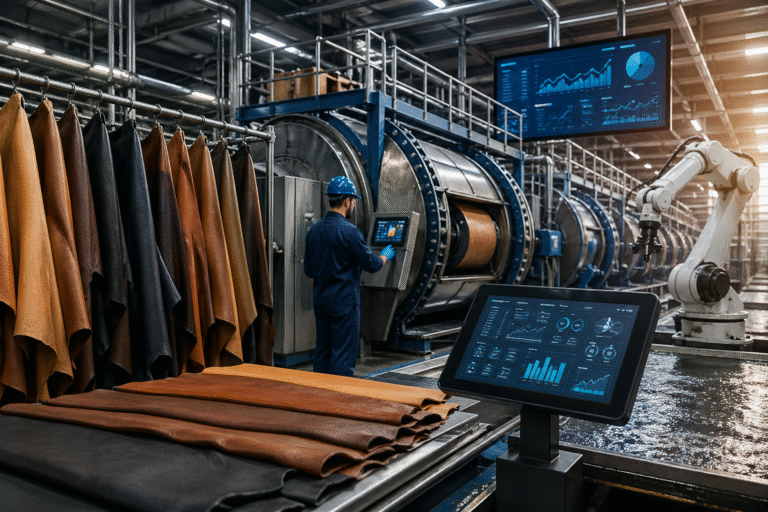
Digital monitoring and advanced testing will enhance the adherence to automotive leather standards, the level of consistency, and traceability.
Final Takeaway: Meeting Automotive Leather Requirements Successfully
The modern vehicle interiors demand quality, safety and performance that are established by the automotive leather requirements.
Knowledgeable buyers, conversant with the automotive leather standards, test procedures and supplier anticipations, can buy quality and dependable automotive upholstery leather with ease.
These are some of the requirements needed to sustain success in the automotive supply chain in the long-term.
FAQs
- What is ISO 9001 certified leather?
Certified leather ISO 9001 implies that the manufacturer adheres to the quality management system that is internationally accepted. It guarantees the consistency of production, process control, records and continuous improvement, but not the leather itself, just a quality system that is applied to the production of the leather.
- What is automotive grade leather?
Automotive grade leather is a type of special processed leather that suits the requirements of car interiors. It has a high degree of durability, abrasion, UV stability, color stability, odor control, and safe usage to work effectively under heat friction and in long term service.
- What is the difference between 2000 and 3000 grade leather?
The grade of the leather usually refers to the standard durability and finishing quality which is 2000 grade and higher grade (3000) refers to the better abrasion resistance, improved age performance and increased test compliance. These are not universal grades; these grades are usually in-house categories practiced by manufacturers.
- How to identify leather quality?
The quality of leather can be determined by assessing the regularity of grains, uniformity of the thickness, flexibility of the leather, smell, finish strength and scratching strength. Good leather is natural, has a good degree of bending, has an even dye absorption and has little artificial correction or surface coating.
- What is D grade leather?
D grade leather is low grade leather and has a lot of visible defects like scars, wrinkles or irregular grain. It lacks space and is often applied to low cost products, greatly retouched finishes or where looks are not essential.