The raw leather processing is an important step in the production of leather which converts the hides of animals that are preserved to a stable, semi-finished state that can undergo further finishing.
Hides would not last long without the proper handling of raw leather, they would lose their strength and acquire defects which would be impossible to remove in the future.
Raw leather processing process starts with salted hides and stops at the wet blue level, which is the stage when leather is stabilized chemically. Knowledge on the processing of raw leather assists manufacturers, purchasers and industry practitioners in the evaluation of quality, decrease of waste and achieve uniformity in performance of leather in the global supply chains.
Introduction to Raw Leather Processing
What Is Raw Leather Processing?
Raw leather processing can be defined as the stages of mechanization and chemical procedures, which are controlled in order to make the raw hides of the animals ready to be tanned.
These are raw leather processing stages that purify, refill and structure hides in a way that they can be transformed into usable leather. Raw leather processing is an intermediate between tanning and preservation of hide.
Why Raw Leather Must Be Processed Before Tanning
Raw hides have salt, dirt, blood, fats and hair. In the absence of raw leather processing, even tanning chemicals are not able to penetrate. Raw leather is properly processed to allow clean fibers, appropriate PH, and open hide structure which are all necessary in successful tanning.
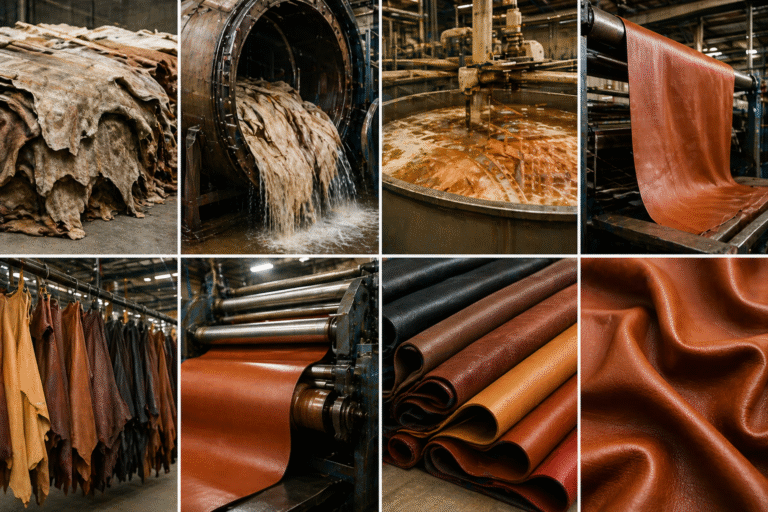
Overview of the Raw Hide to Wet Blue Journey
Raw leather processing steps consist of soaking, liming, fleshing, deliming, bating, pickling and tanning. These leather processing processes lead to the production of a semi-finished product (wet blue leather) in a gradual manner.
Understanding Salted Hides in Leather Processing
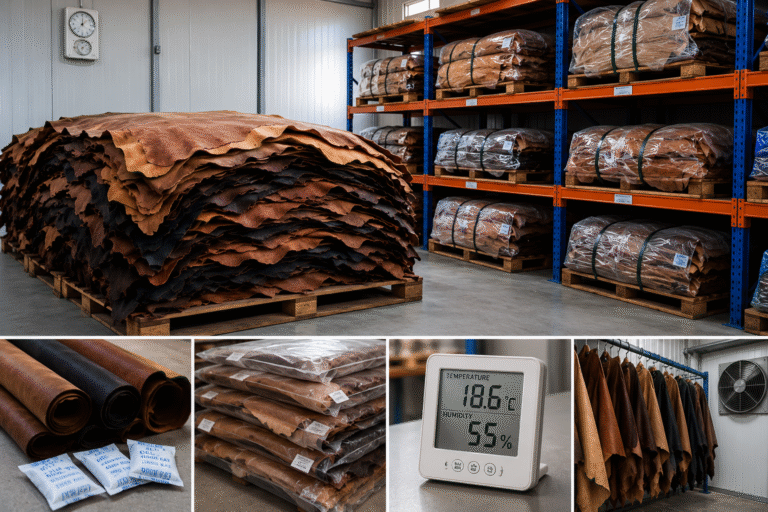
What Are Salted Hides and Why Salting Is Used
Salted hides are skins of animals that have been covered with salt to eliminate the process of bacteria decadence. Raw leather processing is not possible without salting, particularly when the hides have to be stored or transported in long distances.
How Salted Hides Processing Prevents Decay
Salted hides Salted hides are processed by removing moisture in the hides and preventing the work of bacteria. This conservation enables the raw leather to be processed without structural damage of fibers on the hides.
Storage and Transport of Salted Raw Hides
Salty hides should be dry, well-ventilated and kept cool during storage and transportation processes. Any improper treatment in this stage may have adverse effects on subsequent stages of raw leather processing.
Initial Steps in Raw Leather Processing
Soaking Salted Hides to Rehydrate the Skin
The initial active process of raw leather processing is soaking. It eliminates excessive salt and replenishes hides to achieve the level of natural moisture and makes them ready for further chemical processing.
Removing Salt, Dirt, and Blood
Raw leather processing by means of controlled soaking and washing eliminates tanning interferents like contaminants. The clean hides permit even penetration of chemicals later in the process of leather treatment.
Preparing Hides for Chemical Processing
Hides are soaked after which they attain the right moisture balance. This is a preparation phase that is necessary because chemicals used in raw leather processing would be effective.
Liming and Unhairing in Leather Processing Stages
Purpose of Liming in Raw Leather Processing
Liming softens hair and opens the structure of the fiber in hides. This is a basic stage in processing of the raw leather as it will prepare the hides to be fleshed and tanned.
Hair Removal and Fiber Opening
During liming hair is removed by mechanical or chemical means. The opening of the fibers enables improved penetration of the tanning agents in later wet blue leather processing.
Impact of Liming on Hide Structure
The liming is done properly without destroying the hide as it enhances the separation of the fibers. Still, poor liming may compromise structure and decrease end product quality of leather.
Fleshing, Splitting, and Trimming Operations
Removing Flesh and Fat from Raw Hides
Fleshing cuts the flesh side of the hide off to leave the residual fat and tissue. The move enhances hygiene and avoids flaws in the process of raw leather handling.
Splitting Hides to Control Thickness
To attain required thickness, splitting is split into layers. The consistency of leather work processing stages and its ultimate application can only be achieved through its thickness protection.
Trimming and Preparing Hides for Tanning
Trimming is used in order to remove irregular edges and broken parts making it uniform irrespective of the tanning process.
Deliming, Bating, and Pickling Processes
Adjusting pH Levels Before Tanning
Deliming limits alkalinity added in liming. During the processing of raw leather, it is necessary to adjust the PH appropriately in order to achieve safe tanning.
Enzymatic Softening and Fiber Refinement
Bating involves the use of enzymes to make hides soft and the fibers to be refined. This operation increases flexibility and increases the final leather feel.
Why Pickling Is Required for Wet Blue Leather Processing
Pickling decreases the pH and hides are chrome tanned. This is an important step taken in the process of wet blue leather.
Tanning Stage in Raw Leather Processing
Purpose of Tanning in Leather Processing Stages
Tanning fixes the proteins in the hides and, consequently, leather is not affected by decay. It is the one that defines how raw leather is processed into usable material.
Chrome Tanning Explained Simply
Chrome tanning involves the use of chromium salts to make wet blue leather. This is the process that dominates the world in the raw leather process because it is fast and consistent.
How Raw Leather Becomes Wet Blue Leather
When the chrome tan has been applied, the hides are wet blue leather, chemically stable, flexible and need to be further finished.
Wet Blue Leather Processing Explained
What Is Wet Blue Leather?
Wet blue leather is a semi-finished chrome tan leather. It is the accomplishment of initial raw leather processing.
Key Characteristics of Wet Blue Leather
Wet blue leather is tough, pliant, anti-bacterial, and convenient to move around. These characteristics cause it to center on world-processing stages of leather.
Why Wet Blue Leather Is Traded Globally
The wet blue leather is also stable and versatile hence is highly exported to be finished in other countries.
Quality Control During Raw Leather Processing Steps
Monitoring Thickness, pH, and Chemical Penetration
During the processing of raw leather, quality checks will be done to make sure that the leather is of the right thickness, that the pH is right, and that the chemical is distributed evenly.
Identifying Defects During Processing
Through early identification of scars, holes or chemical damages, waste is minimized and uniformity is enhanced.
Ensuring Consistency Before Further Processing
Regular processing of raw leathers leads to the consistency of the finishing and increased value in the market.
Common Challenges in Raw Leather Processing
Damage from Improper Salting or Storage
The problem with salted hides processing is that once done, it cannot be undone and it will have an impact on all subsequent steps in the processing of leather.
Processing Errors That Affect Wet Blue Quality
Any error during the processes of liming, pickling or tanning may make wet blue leather weak and limit its use.
Environmental and Waste Management Concerns
The raw leather manufacturing produces waste water and solid waste. Sustainability and compliance should be managed responsibly.
Final Takeaway: From Salted Hides to Wet Blue Leather
The raw leathers processing is a process that is well regulated and takes the salted hides to wet blue leather that is stable.
Each stage is based upon the one before it and errors in the early stages impact on the quality of the final stages. Knowledge of the raw leather processing will guide buyers and manufacturers to make the right choice and attain the uniform performance of leather.
FAQs
- What is the process of wet blue leather?
The wet blue leather process is a process that uses chrome tanning of the hides that are prepared by other processes such as soaking, liming and pickling. The hide fibers are made wet and blue by being combined with chromium salts. This is a semi-finished leather that is durable, flexible and can be subjected to additional treatment like dyeing and finishing.
- What is the name of the process that turns raw hide into leather?
The transformation of raw hide to leather is referred to as tanning. The collagen fibers of the hide are chemically tanned to stabilize them which ensures that the hide does not rot. Tanning makes the material strong and flexible. Raw hides would not last long in the atmosphere without tanning and could not be utilized in the manufacture of long-term leather merchandise.
- How does the leather tanning process work?
The tanning of leather is achieved by putting the hides in their ready state and applying tanning chemicals which attach themselves to the collagen fibers. These agents block degradation of bacteria, enhance strength, and flexibility. Tanning can be done permanently by using chromium salts, vegetable tannins, or some other agent depending on the technique.
- What salt is used in leather tanning?
The main salt that is employed in the tanning process of leather and preserving hides is sodium chloride. It is used in the curing process to eliminate moisture as well as to inhibit the growth of bacteria. In the early steps of processing, soaking is done to remove the salt in order to allow the tanning chemicals to penetrate the hide fibers accordingly.
- How do you get salt out of leather?
During the soaking process of the raw leather, the salt is washed out of the leather. Hides are left to immerse in clean water, and in most cases with a mild additive, to loosen and cleanse salt. Correct soaking is the key in restoring the natural moisture in the leather and putting the leather back to the next step of chemical processing and tanning.