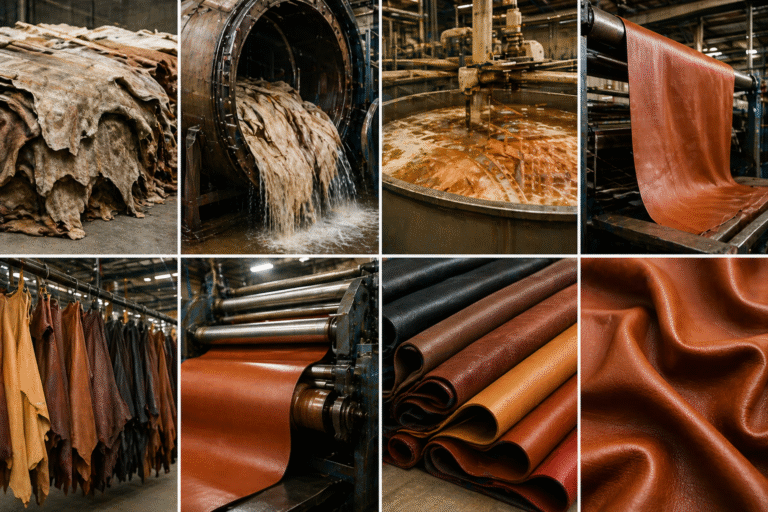
The last and most visible processes in leather production are leather finishing techniques that also define the appearance, touch, and performance of leather in the real world.
The leather may be of good quality but when finished in a poor manner it loses value. Leather finishing provides leather with color, texture, shining, protection, and usability. Soft fashion leather can be made into the rugged automotive hides; it all depends on what is finished in the finish to determine the ultimate personality of the product.
Knowledge of leather finishing can assist the manufacturers, designers and buyers make judgments about quality that goes beyond the surface.
Finishing is the last stage in the manufacturing process where the leather is transformed to a marketable product out of a processed hide to match the functions, aesthetic and durability expectations.
Leather Finishing Process: Step-by-Step Overview
When Leather Finishing Happens in Leather Processing
The leather finishing processes commence once tanning, retanning, dyeing and drying have been done. Leather at this stage is stable and incomplete.
The finishing of leather is done after it has been laid down and the internal structure is in place, the finishing does not affect any fiber strength.
One of the last processes in the leather processing is finishing, which has a direct bearing on the suitability of the products.
How Finishing Prepares Leather for Final Use
The leather finishing methods make leather ready to be used in a particular application like footwear, bags, furniture or automotive. Drying enhances moisture, wear and stain resistance. It also improves the aesthetics by polishing grain, color and applying protection layers. Leather would be inconsistent and unprotected without using an appropriate leather finishing procedure.
Types of Leather Finishing Used in Tanneries
Natural Leather Finishing vs Corrected Leather Finishing
Leather finishing varies with the result that is required. Natural leather finishing is barely treated on the surface, and the natural marks and texture are emphasized.
Corrected leather finishing refers to the buffing and coating in order to eliminate or conceal the flaws. The two kinds of leather finishing are determined by the quality of hides and purpose of use.
How Different Finishing Techniques Affect Leather Performance
There are direct influences on breathability, flexibility, durability, and aging behavior, which are directly influenced by leather finishing techniques.
Light finishing keeps the softness and formation of the patina whereas heavy finishing enhances evenness and security. The correct finishing strategy will make leather work as desired over its lifetime.
Buffing Leather Surface: Purpose and Method
What Is Buffing in Leather Finishing Techniques?
Buffing is a mechanical finishing process in leather finishing to add a slight sanding to the leather. Leather surface Buffing is useful to take away scars, ripples and small imperfections. It is mostly applied in leather preparation to be coated or to make suede and nubuck finishes.
How Buffing Changes Texture, Grain, and Feel
Buffing on the leather surface changes the texture, it smooths or softens the grain. It is able to minimize shine, give it a velvety touch, or fix the surface to even application of coatings.
Although buffing enhances the look, too much buffing can reduce the strength of the grain, thus buffing should be well managed in methods of leather finishing.
Common Leather Types That Use Buffed Finishes
Buffed finishes are popular in corrected-grain leather, nubuck and suede. These types of leathers have the advantage of controlled surface abrasion which makes buffing leather surface an important procedure in most finishing operations.
Leather Dyeing Process Explained Simply
Why Leather Is Dyed During Finishing
The dyeing of leather makes it colorful and attractive and gives a uniform look. Staining also assists in bringing out the grain patterns or attaining fashion-oriented hues.
In leather finishing, dyeing may be held prior to finishing or even in the course of finishing depending on the level of depth and tone required.
Drum Dyeing vs Surface Dyeing Methods
Drum dyeing enables dye to soak deep into leather resulting in vivid and even color all over. Surface dyeing just supplies the surface. The two both constitute significant components of the dyeing process in leather and are selected depending on the products.
How Dyeing Affects Color Consistency and Depth
A well controlled leather coloration process will make the color consistent, less spotty and increase market value.
Dyeing may fail to produce even shades, fade, or crack on the surface, hence, dyeing is a crucial stage of leather finishing techniques.
Leather Coating Methods and Protective Finishes
What Is Leather Coating in the Finishing Process?
The options of leather coating include using protective layers on the leather surface. These finishes enhance resistance to wear, resistance to stains as well as aestheticity. Coating is among the most crucial techniques of finishing leather products of high usage.
Common Leather Coating Methods (Spray, Roller, Hand Finish)
The uniform application is achieved through spray coating, roller coating is applied in order to control the thickness, and hand finishing is applied to fine leather. All of these techniques of leather coating have different performance and aesthetic purposes.
How Coatings Improve Durability, Water Resistance, and Shine
Techniques of applying leather coating help to resist moisture, abrasion, and UV degradation of leather. Finishes may be glossy, matte or natural. Correct coating prolongs the life of leather and lessens the maintenance.
Comparing Buffing, Dyeing, and Coating Techniques
Visual Appearance and Texture Differences
Buffing has the effect of softening texture, dyeing colors adds layers of color and coating gives the surface protection.
These methods of leather finishing, combined, determine the appearance of leather as well as its feel. Their ratio makes the difference between a natural, polished, and heavily-corrected leather.
Durability, Maintenance, and Aging Comparison
Leather that is lightly finished wears off naturally but needs more maintenance. Leather that is coated heavily is easier to maintain and forms less patina.
The knowledge of these differences will aid manufacturers in choosing the right leather finishing techniques to be used in each category of products.
How Leather Finishing Techniques Affect Leather Grades
Finishing Techniques Used for High-Grade Leather
Grades of leather of high quality are finished with minimum finishing to retain natural grain. These leather finishing techniques consider soft dyes and thin-layered finishes so the quality of leather can not be obscured.
How Heavy Finishing Can Hide Defects in Lower Grades
Lower quality leather is commonly used with heavy buffing and coating to cover the defects. Although this enhances appearance, it may decrease the quality of breathability and longevity of aging.
Choosing the Right Leather Finishing Technique
Best Finishing Techniques for Footwear and Bags
Shoes and luggage also demand balanced leather finishing styles which are flexible, durable and appealing to the eyes.
Usually it is dyed by drum dyeing and protective coating.
Best Finishing Techniques for Furniture and Automotive Leather
Automobile leather and furniture need leather coating that is more robust to fight wear, stains and sunlight. These applications give more importance to durability rather than natural aging.
Common Problems in Leather Finishing and How They Are Avoided
Uneven Color, Peeling, and Over-Coating Issues
The common problems are uneven dyeing, peeling coatings and over-finishing. These problems are realized when there is poor control or in haste of leather finishing techniques.
Quality Control Practices in Leather Finishing
There is also strict quality inspection so that there is uniformity in terms of color, adhesion and surface performance. Successful leather finishing techniques require good quality control.
Final Takeaway: Understanding Leather Finishing Techniques Clearly
Finishing is the last process in which leather is finished, which defines the value of leather, its utilization, and durability. Each buffing, dyeing, and coating has a certain role with regard to shaping leather performance.
The knowledge of the leather finishing process and the various type of leather finishing enables the purchasers and manufacturers to assess quality better and select the appropriate type of leather to use in each application.
FAQS
- How to buff leather dye?
In order to buff leather dye you must first have the dye leather dry first. Afterwards, wipe off the surface using a dry soft cloth, or soft brush. Buffing is used to remove the dye pigment that is lying on top of the leather and smooths the color.
- What is the leather finishing process?
The last step in leather production is the leather finishing process that enhances the performance, feel and appearance. It consists of buffing, dyeing, coating, polishing, and protective procedures. The process of finishing increases the uniformity of color, water resistance, and durability. This is done to make certain applications such as shoes, bags, furniture or interior motors.
- What are the different types of leather finishes?
The industry has a number of leather finishes. Some of them are natural finish, aniline finish, semi-aniline finish, pigmented finish, nubuck finish and suede finish. Both of them influence texture, appearance, durability, and maintenance. The option of finish will be based on the quality of the leather, the purpose of the leather, and the appearance that one wants.
- How to finish leather after dyeing?
Leather after being dyed should be completely dry before finishing. After it is dry, it is coated with a protective coating like wax, oil, cream or leather sealer. This assists in fixing color, moisture resistance and durability. Light coating of the coats will result in a smooth surface. Finishing is also appropriate to increase the look of the leather and its durability.
- How to soften leather after dying?
In order to harden leather after dying, flex and work the leather (by hand) gently when it is partially dry. A leather conditioner/oil can be used to restore moisture that is lost during dyeing. The lubrication enables the fibers to move freely enhancing the softness and flexibility.